Featured Double Glazed Systems & Commercial Architectural Fenestration
Precision-milled 6063-T5/T6 structural aluminium profiles matched with argon-charged insulated glass units (IGU), multi-point safety locks, and high-performance weatherization barriers.
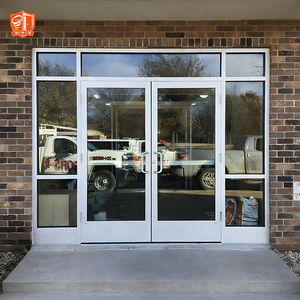
Customized Office Entrance Doors Windproof Aluminum Frame Store Front Doors Glass Doors for Business
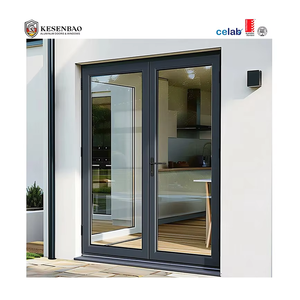
Soundproof Double Glass Aluminum Casement Door Aluminium Swing Door for Hospital House Use
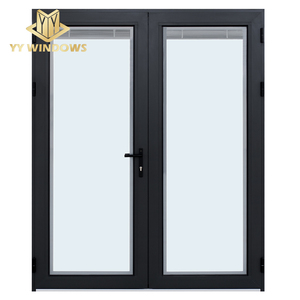
Double Glass California Architectural Industrial Aluminum French Doors Exterior/aluminum Hinged Door with Screen
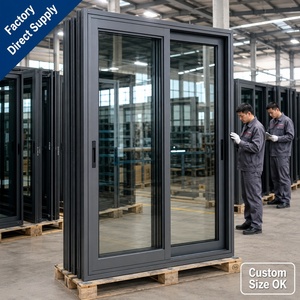
Aluminum Sliding Window with Hurricane Impact Glass, Project Grade Window for Coastal Commercial Development
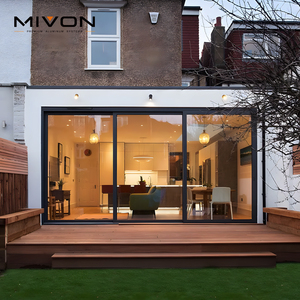
Black Frame Sliding Doors Heavy Duty Aluminum Sliding Door Exterior Patio Doors Sliding Glass for Villa House
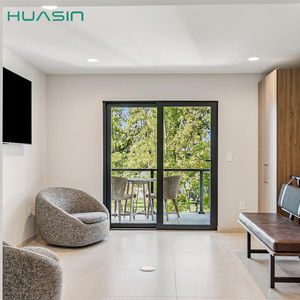
Huasin US Slide Door Custom Energy Efficient Interior Balcony Aluminium Glass Sliding Doors
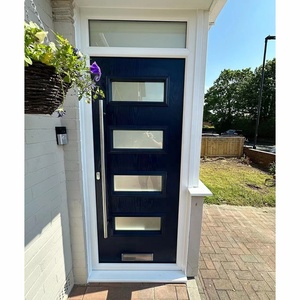
NUOXIN Customized Aluminum Front Entry Door Casement Aluminium Alloy Glass Door Exterior Security Entrance Main Doors
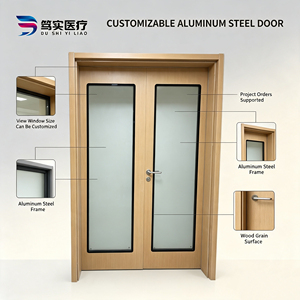
Dushi Custom Wood Grain Aluminum Alloy Double Swing Door Large Size Observation Tempered Glass Window Modern Antibacterial
Technical Authority & Zero-Tolerance Manufacturing Integrity
Why Tier-1 architectural developers, commercial façade engineers, and overseas general contractors source directly from our Foshan production infrastructure.
Patented Four-Side Six-Point Security
Unlike conventional multi-point locks prone to sash-corner leverage failure, DERCHI's proprietary locking architecture ties the active sash into the sub-frame across four dimensions. Engineered to resist dynamic mechanical intrusions and extreme differential negative wind loads up to 5,500 Pa.
Technoform Polyamide Thermal Barriers
We mandate multi-cavity PA66GF25 (polyamide reinforced with 25% structural glass fiber) thermal break strips across all casement, tilt-and-turn, and sliding series. This eliminates thermal bridging, prevents dew condensation under -30°C gradients, and slashes overall building HVAC demand by 34%.
Verified Global Testing & Certifications
Certified conformity verified across four continents: North American NFRC and CSA standards for thermal efficiency; Australian AS2047 deflection and water penetration testing; European CE (EN 14351-1); and ISO 9001 quality audits. Each container leaves with localized factory lab compliance documentation.
Specification Benchmark: Factory-Direct vs. Regional Workshop Fabrication
A granular side-by-side audit of metallurgical composition, hardware cycle testing, and atmospheric seal integrity.
| Engineering Parameter | DERCHI Foshan Smart Factory Direct | Conventional Processing Workshops |
|---|---|---|
| Aluminium Ingot Grade | 100% Virgin 6063-T5 / 6063-T6 Primary Extrusion Billet | Secondary scrap re-melt blends (susceptible to intergranular corrosion) |
| Structural Wall Thickness | 1.4mm to 3.0mm (Compliant with High-Rise Deflection L/175 & L/250) | Sub-gauge profiles (often 1.0mm - 1.2mm prone to hinge drop) |
| Thermal Break Composition | Imported Technoform PA66GF25 Glass-Fiber Polyamide | Low-grade PVC strips (cracks under UV exposure & thermal expansion) |
| IGU Hermetic Sealing | Dual-seal Polyisobutylene (PIB) primary + Structural Silicone secondary | Single polysulfide or hot-melt butyl (fogging within 24-36 months) |
| Argon Gas Retention | ≥90% robotic vacuum automated chamber filling (≤1% annual leakage rate) | Manual needle injection or raw dry air without vacuum verification |
| Weatherization Gaskets | Continuous vulcanized co-extruded EPDM gaskets with welded corners | Stitched PVC or recycled rubber gaskets (shrinks and leaks in winter) |
| Hardware Mechanical Cycles | 50,000+ open/close cycles without deflection (Siegenia / Hoppe / DERCHI) | Generic zinc-alloy zinc-plated components (fails within 5,000 cycles) |
Future Trends in Global Aluminium Window & Door Sourcing
Key technological, regulatory, and logistical transformations governing commercial and residential fenestration over the next decade.
Aggressive Decarbonization & Near-Zero Energy Buildings (NZEB)
Across North America, Europe, and the Southern Cone, building energy codes are drastically tightening permissible envelope U-values. The market is shifting from standard double glazing to triple-silver Low-E IGU configurations, warm-edge composite spacers, and aerogel-infused thermal cavities designed to achieve overall window U-factors below 0.85 W/(m²·K). Procuring compliant fenestration early provides a massive lifecycle appraisal bonus for developers.
Maximized Daylight: Structural Minimalist Profiles
The architectural community demands panoramic glazing with ultra-narrow sightlines (as slim as 20mm to 35mm visible profile). To accommodate immense structural glass loads without frame deformation, Chinese advanced manufacturing has pioneered high-silicon alloy tempering (6063-T6/6061-T6) combined with structural glazing tape (VHB) bonding techniques, enabling oversized sashes weighing up to 800 kg to slide seamlessly on concealed precision stainless steel bearings.
BIM-Integrated Supply Chains & Modular Prefabrication
Procurement teams are ditching manual 2D CAD handoffs. The new paradigm relies on BIM (Building Information Modeling) parametric object exchange directly between overseas project architects and Chinese CNC profile machining centers. This digital-twin integration slashes pre-production revision rounds from 4 weeks to 48 hours, eliminating opening dimension errors before profile extrusion cut-off.
Coastal Resilience & Multi-Hazard Engineering
Accelerating global climate volatility requires fenestration that simultaneously addresses severe hurricane cyclic wind pressure, extreme seismic inter-story drift (essential in the Pacific Rim seismic belt of Chile and Peru), and severe salt-fog atmospheric corrosion. Procurement contracts now demand marine-grade AAMA 2605 70% PVDF fluorocarbon coatings capable of surpassing 4,000 hours in neutral salt spray testing.
Frequently Asked Questions: Global Window Sourcing & Procurement
Critical engineering considerations, shipping contingencies, and quality assurance protocols answered by senior facade manufacturing engineers.
Initiate Your Engineering Review & Factory-Direct Quotation
Send your door and window schedules, architectural DWG/PDF drawings, or energy rating targets. Our structural fenestration engineers will provide shop drawings, thermal calculations, and factory-direct pricing within 24 business hours.