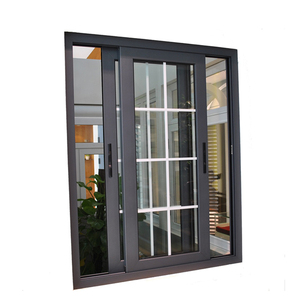
Factory Catalog
High-Performance Aluminium Door & Window Series
Manufactured under strict ISO9001 and six-sigma quality guidelines in Foshan, China. Fully compliant with NFRC, CE, AS2047, and CSA performance standards.
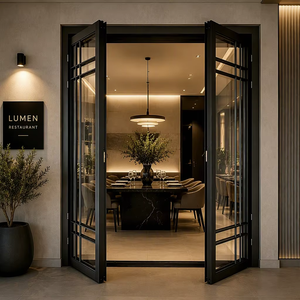
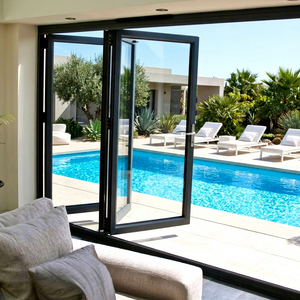
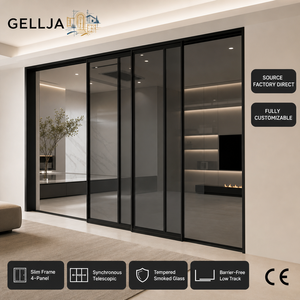
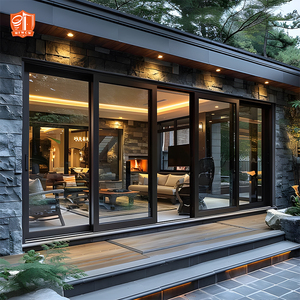
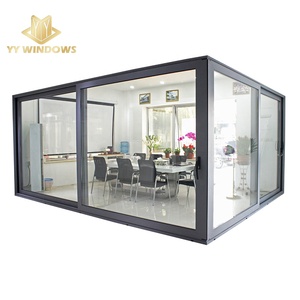
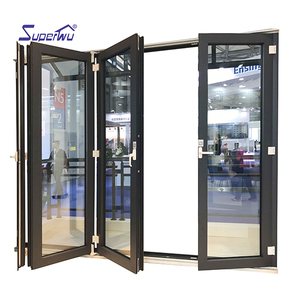
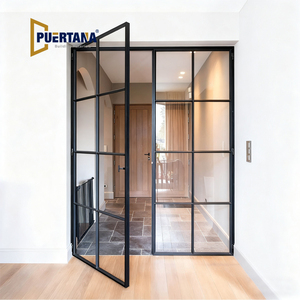
Industry Insight
Engineering Architecture: Navigating Next-Gen Fenestration Procurement
Technical benchmarks, structural integrity considerations, and thermal dynamics in cross-border fenestration sourcing.
In modern commercial and high-density residential development, procuring fenestration systems from a specialized China wholesale aluminium door with window factory requires an in-depth understanding of thermal efficiency, seismic tolerance, and metallurgical performance. Fenestration systems are no longer treated as passive architectural components; they serve as active building envelope barriers designed to withstand severe weather events, reduce carbon footprints, and guarantee structural defense. Standardizing aluminium extrusion profiles using 6063-T5 or 6063-T6 architectural alloys ensures that profile wall thicknesses (consistently engineered from 1.4mm to beyond 3.0mm) fulfill static deflection and high wind pressure requirements across international building codes.
"The modern procurement objective focuses heavily on lowering overall project lifecycle costs through integrated thermal performance, multi-cavity barrier designs, and certified cyclone deflection properties rather than solely comparing initial ex-factory rates."
Global procurement teams must balance structural load values with thermal insulation coefficients (U-Values and Solar Heat Gain Coefficients, or SHGC). When specifying multi-track sliding doors, lift-and-slide mechanisms, and heavy-duty casement systems, thermal bridging remains a critical technical obstacle. By incorporating multi-chambered Polyamide (PA66 GF25) thermal barrier strips, contemporary factories isolate internal and external aluminium assemblies. This engineering mitigation suppresses condensation, drastically reduces heating and cooling HVAC loads, and complies with stringent energy standards, including Florida NOA windborne debris codes, Australian AS2047, and European CE directives.
Procurement Trends
Future Procurement Trends in the Global Aluminium Fenestration Market
Anticipating supply chain transformations, materials innovation, and digital customization trends over the next decade.
Total Envelope Harmonization
Institutional developers increasingly reject fragmented vendor sourcing. The trend demands consolidating architectural windows, entrance pivot systems, glass sunrooms, and interior divider systems with a single manufacturer. This ensures identical surface treatment formulations (such as AkzoNobel powder coats or Qualicoat Class 2 fluorocarbon finishes), unified glass performance specifications, and simplified shipping consolidation.
BIM Integration & Parametric Design
Procurement workflows are transitioning away from flat 2D elevation schedules toward integrated Building Information Modeling (BIM) files and parametric shop drawings. Exporters providing native Revit files, wind pressure structural analysis calculations, and accurate thermal transmission simulations enable architects to expedite code compliance inspections prior to production line scheduling.
Circular Metallurgy & Low-Carbon Billets
With environmental validation taking center stage, international developers are prioritizing factories utilizing certified low-carbon aluminium billets produced via renewable energy sources (hydroelectric smelters) alongside verified recycled content. Life Cycle Assessments (LCA) and Environmental Product Declarations (EPD) are rapidly transitioning from marketing extras to mandatory tender criteria.
Innovation Vectors
Emerging Design & Performance Paradigms in Aluminium Systems
How modern minimalist architecture, extreme weather frequency, and automation are reshaping fabrication.
Ultra-Slim Sightlines & Concealed Sashes
The demand for uninterrupted panoramic vistas has driven the development of minimalist sliding and casement profiles with interlock sightlines reduced to as narrow as 20mm. Utilizing structural silicone glazing and concealed sub-frame drainage chambers, contemporary assemblies hide the aluminium jamb within wall reveals while retaining water tightness against heavy rainfall.
Active Hurricane & Seismic Resilience
Global climatic disruption necessitates severe-event protection. Advanced designs utilize laminated SGP (SentryGlas®) interlayers paired with heavy-duty multi-point security hardware. Systems engineered for high-altitude or seismic regions feature expanded structural mullion inertia to absorb ground movement without breaking seals or causing structural deflection.
Smart Automation & Integrated Security
High-end hospitality and modern residential applications are accelerating the integration of concealed electromagnetic drives, motorized flush sliding gears, and remote sensor suites into aluminium joinery. Doors and windows integrate with central smart management platforms, automatically actuating for climate optimization and securing via patented anti-intrusion multi-locking pins.
Enterprise Advantage
Why Tier-1 Contractors & Importers Partner With DERCHI
Combining 25+ years of engineering mastery, intelligent manufacturing capacity, and verified global credentials.
Foshan Industrial Heart & Scale
Headquartered in Foshan, Guangdong—China's capital for precision aluminium extrusion—our enterprise operates a cutting-edge 180,000 m² manufacturing facility. With more than 600 skilled technicians and advanced automated CNC double-miter saws, we achieve an annual fabrication capacity surpassing 1,000,000 m² with prompt delivery timelines.
100+ Patents & Patented Hardware
Our dedicated R&D engineering division has secured over 100 national invention patents. Among our marquee developments is the proprietary Four-Side Six-Point Lock mechanism, designed to counter forced burglary attempts while ensuring uniform perimeter pressure on EPDM weather-stripping for superior acoustic and water protection.
International Testing & Certifications
We eliminate regulatory friction for overseas builders. Our architectural series are verified through international laboratory test suites, holding CE (EU), NFRC (North America), AS2047 (Australia), CSA (Canada), Energy Star ratings, and ISO 9001 quality audits. Honored as a "China Famous Brand" by Xinhua News Agency, we provide documented compliance.
Proven Hospitality & Commercial Track Record
With more than 18,000 successful projects delivered globally, our engineering team regularly partners with demanding hospitality and residential developments, including Hilton Hotels, Atour Hotels, and luxury gated estates across North America, South America, Europe, the Middle East, and Oceania.
Export Packaging & Ocean Logistics Mastery
Exporting custom glazed openings requires resilient crating. Every unit is protected with anti-scratch films, rigid corner guards, waterproof wrap, and fumigated solid timber crates engineered for rough container transport. Detailed container stuffing calculations maximize freight efficiency while minimizing handling damage during transit.
Standard Operating Procedure
Our Controlled 8-Step Engineering & Export Process
A structured workflow eliminating dimensional errors and safeguarding budget accuracy for offshore project teams.
Step 01
Drawing Review
Detailed analysis of client architectural elevations, opening schedules, and local code demands.
Step 02
R&D & Engineering
Thermal transmission calculations, alloy selection, and structural mullion load simulations.
Step 03
Technical Proposal
Comprehensive submittal package with profile sections, glass configurations, and hardware brands.
Step 04
Details Finalized
Final sign-off on 1:1 scale shop drawings, RAL color codes, glass tints, and installation reveals.
Step 05
Order Confirmation
Deposit clearance, master production scheduling, and raw material quality verification.
Step 06
Site Measurement
Verification of exact structural openings via laser surveys or client-certified site templates.
Step 07
Production & 360° QC
Automated cutting, corner crimping, glass installation, and mock-up operation inspection.
Step 08
Logistics & Guidance
Export crating, sea freight clearance, complete documentation, and on-site technical installation support.
Buyer Knowledge Base
Frequently Asked Questions: B2B Aluminium Door & Window Procurement
Expert answers addressing the primary technical and logistics inquiries of international procurement directors.
What are the minimum profile thickness standards for commercial export projects?
For international residential and commercial specifications, casement windows typically utilize profile thicknesses between 1.4mm and 1.8mm. Heavy sliding patio systems and bi-fold systems require wall thicknesses from 2.0mm to 3.0mm, depending on panel heights and calculated design wind pressures. Heavy-duty commercial entrances and curtain wall systems feature profiles exceeding 3.0mm to satisfy dynamic wind load criteria.
How does your factory ensure profile thermal breaks withstand extreme temperature fluctuations?
We exclusively utilize imported Polyamide PA66 reinforced with 25% glass fiber (PA66 GF25) thermal strips. Unlike cheaper PVC substitutes that become brittle in cold climates or deform under direct solar exposure, PA66 GF25 shares an identical coefficient of thermal expansion with aluminium alloy. This mechanical synergy prevents delamination, warping, and perimeter air leaks across severe temperature differentials from -40°C to +80°C.
What surface treatment warranty options are available for coastal or high-salinity projects?
For coastal installations located within 1,000 meters of salt water, we offer marine-grade anodizing (Class 20 or 25, 20-25 microns thick) or architectural fluorocarbon (PVDF) 3-coat and 4-coat systems, formulated with resins such as Kynar 500 or Hylar 5000. These specialized surface finishes pass rigorous 3,000-to-4,000-hour continuous salt spray tests (ASTM B117), providing 15 to 25 years of documented warranty protection against chalking, fading, and filiform corrosion.
What international testing standards and certifications can you supply for code compliance?
Depending on your regional requirements, we provide certified test reports for: North America (NFRC thermal modeling, AAMA/WDMA/CSA air/water/structural, Florida NOA impact certifications), Europe (CE testing via EN 14351-1), Australia/New Zealand (AS2047, AS1288 human impact), and global quality certifications under ISO 9001 and ISO 14001. Detailed compliance packages are submitted directly to your project's certifying engineers.
What are the standard factory lead times, minimum order quantities (MOQ), and sample policies?
For standard extrusion profiles and powder coatings, our typical production cycle ranges from 30 to 40 days following final CAD shop drawing approvals. Custom profile extrusion dies or custom RAL finishes require an additional 10 to 15 days. While our primary focus is wholesale FCL (Full Container Load) shipments for developers and commercial distributors, we accept project-based MOQs starting at 30 m² for architectural villa mock-ups. Pre-production corner cuts and custom physical samples are routinely expedited via air courier.
Initiate Your Wholesale fenestration Consultation
Submit your architectural elevations, opening schedules, or custom profile specifications directly to our engineering department in Foshan, China. We guarantee comprehensive technical feedback and detailed project estimates within 24 business hours.
Send an Inquiry