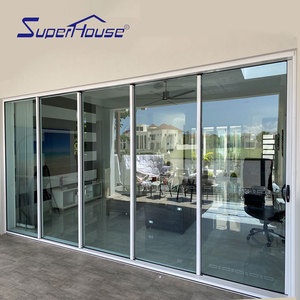
Precision-Engineered Kitchen Door Solutions
Explore our certified export series engineered specifically for contemporary culinary and dining spaces. Combining high-tensile 6063-T5 aluminum alloy, multi-point isolation gaskets, and anti-oil surface nanotechnology.

25+
Years Engineering Expertise
180,000m²
Smart Manufacturing Base
1,000,000m²+
Annual Production Output
18,000+
Global Projects Completed
100+
Patented Structural Designs
600+
Skilled Technical Personnel
Technical Analysis: Engineering Superior Kitchen Doors
Modern architectural specifications demand kitchen door systems that transcend conventional aesthetics. Commercial and residential spaces require strict barrier integrity against airborne oil particles, rapid thermal bridging, and acoustic pollution.
Alloy Metallurgy & Structural Wall Thickness
Primary grade 6063-T5 virgin aluminum billet extrusions form the backbone of premium kitchen openings. Unlike low-spec architectural products utilizing recycled scrap with high impurity rates, structural virgin aluminum maintains a wall thickness between 1.6mm and 3.0mm. This dimensional precision avoids torsion stress, profile warping, and hinge binding caused by persistent thermal cycling from kitchen cooking appliances.
Smoke Containment & Co-Extruded EPDM Gaskets
A major failure point in standard kitchen fenestration is the degradation of PVC sealing ribbons under high vapor exposure. We deploy automotive-grade co-extruded continuous EPDM rubber seals combined with magnetic closure strips. This achieves Class 4 airtight containment under EN 12207, effectively isolating heavy cooking oils, grease, and smoke from adjacent living spaces.
Acoustic Isolation & Glazing Dynamics
Modern open-concept residential designs demand acoustic zoning without blocking daylight transmittance. By configuring PVB-laminated acoustic glass (5mm + 0.76PVB + 5mm) or double-tempered argon-filled IGUs, ambient dishwashing and mechanical extractor fan sounds are attenuated by up to 36dB (Rw), maintaining tranquil noise thresholds throughout open-plan spaces.
| Performance Parameter | Export-Grade Extruded Aluminum (Our Benchmark) | Generic Commodity Aluminum | Traditional Solid Wood / MDF |
|---|---|---|---|
| Alloy Composition | Primary 6063-T5 High Tensile Ingot (Purity > 99.7%) | Secondary / Recycled Aluminum (Variable Tensile) | Engineered Fiberboard / Timber Core |
| Moisture & Vapor Resistance | 100% Waterproof, Zero Swelling, Corrosion Class C4/C5 | Surface Pitting Risk under High Humidity / Saline | Prone to Expansion, Warping & Delamination |
| Air & Smoke Infiltration | Class 4 Airtight (Continuous EPDM + Magnetic Latches) | Class 1-2 (Brush Felt Strips, Wear prone) | Subject to seasonal jamb gap widening |
| Structural Sightline (Frame Width) | Ultra-Slim Minimalist (16mm - 28mm visible profile) | Bulky Standard Profile (50mm - 75mm) | Thick Stiles & Rails (80mm - 110mm) |
| Fire Safety Classification | Non-combustible Class A1 (Zero Flashover Risk) | Non-combustible Base (Inferior Gasket Burn-off) | Combustible Class B2/C (Requires Fire Retardants) |
Future Sourcing & Technological Trends
Procurement directors and architectural specifiers must anticipate where kitchen door engineering is heading. Here are the four dominant manufacturing and design vectors dominating the 2026–2030 sourcing horizon.
Ghost Flush Tracks & Zero-Threshold Architecture
The era of stepped floor profiles is ending. Future-ready commercial and villa kitchen layouts demand recessed floor tracks flush with interior tile or micro-cement finishes. Our proprietary bottom-concealed roller systems incorporate heavy-duty stainless steel self-cleaning ball bearings, eliminating trip hazards, facilitating robot vacuum transitions, and resisting kitchen dirt ingress.
Oleophobic Smart Glass Integration
Kitchen fenestration faces constant exposure to oil droplets and vaporized fats. Future sourcing is shifting rapidly toward vacuum-magnetron sputtered oleophobic glass coatings. By increasing surface contact angle above 110 degrees, grease droplets cannot adhere, cutting cleaning cycles significantly while integrating seamlessly with PDLC switchable privacy films.
Thermal Break Insulation in Interior Partitions
Historically, thermal breaks (polyamide PA66 glass-fiber reinforced nylon strips) were reserved exclusively for exterior building facades. Today, net-zero residential standards require thermal separation between high-heat air-conditioned kitchen zones and living areas, optimizing HVAC energy cycles and curbing household carbon emissions.
Low-Carbon & Circular Supply Chain Standards
Global procurement guidelines across the EU, North America, and Australia now benchmark the embodied carbon of structural building products. Leading Chinese suppliers are switching to hydro-electric smelting power, verified Environmental Product Declarations (EPDs), and toxic-free powder coatings that comply with RoHS and REACH mandates.
Direct Factory Advantage: Foshan Manufacturing Hub
Guangdong Dejiyoupin Doors and Windows Co., Ltd. operates in Foshan, the capital of precision aluminum engineering. Backed by verified international quality management, we deliver complete envelope reliability from shop drawing confirmation to port delivery.
China Famous Brand Honor
Formally recognized by Xinhua News Agency, verifying strict industrial adherence to manufacturing excellence and customer satisfaction.
Patented Six-Point Multi-Lock
Over 100 patents including the proprietary Four-Side Six-Point locking hardware that prevents structural racking and forced entry.
360° Quality Control Inspection
Every profile cut, corner joint crimping, and glass sealing bead undergoes automated and optical laser inspection to maintain ±0.5mm tolerances.
International Compliance
Certified to international testing frameworks including CE (EN14351-1), NFRC, Australian AS2047, CSA standards, and ISO 9001 quality systems.
Heavy-Duty Export Crating
Custom steel-reinforced fumigated plywood crates with multi-layer high-density EVA foam and protective film prevent freight transit damage.
Engineering CAD & BIM Delivery
Complete project-specific structural deflection calculations, BIM files, and step-by-step shop drawings provided prior to extrusion cutting.
Procurement FAQ: Direct Factory Sourcing
Essential technical, logistics, and quality assurance answers for general contractors, architectural specifiers, and window/door importers.
How do you ensure zero-error sizing when ordering custom kitchen doors from China?
We execute an 8-step verification process. Following initial architectural drawing submission, our structural engineers produce comprehensive CAD/BIM shop drawings detailing rough opening dimensions, floor clearance, and wall rebate tolerances. Manufacturing only starts once the engineering plans are cross-signed. Furthermore, on-site measurement guidance or digital laser survey protocols are coordinated for large-scale multi-unit commercial developments.
What surface treatment is best for kitchen doors exposed to cooking grease and cleaning chemicals?
For kitchen environments, we recommend fluorocarbon PVDF coating (AAMA 2605 compliant) or deep-electrophoresis anodized finishes (minimum 15-20 microns). Unlike basic powder coatings that can pit or discolor when scrubbed with degreasers, PVDF and electrophoresis treatments resist lipid adhesion, acids, and detergents without surface chalking or delamination.
What is your typical production lead time and sea freight schedule?
Standard fabrication takes 25 to 35 business days from final shop drawing sign-off and deposit confirmation. Specialized finishes or complex custom extrusion dies may require 40 to 45 days. Ocean shipping transit varies by regional destination: 12-18 days to Southeast Asia/Australia, 20-28 days to the US West Coast, 30-38 days to Europe, and 35-48 days to South American main ports (Santos, Valparaíso, Callao, Buenos Aires).
Can you supply complete whole-house door and window packages matched to kitchen profiles?
Yes. Guangdong Dejiyoupin specializes in whole-building envelope customization. We match surface finishes, glass specifications, and design lines across exterior sliding doors, entry systems, casement windows, structural glass sunrooms, and solid timber interior doors, unifying aesthetic style under a single warranty provider.
How do your aluminum kitchen door systems achieve acoustic insulation?
Acoustic dampening is achieved through three engineering elements: (1) Asymmetrical laminated glass units (e.g., 6mm + 0.76mm acoustic PVB + 5mm tempered glass) disrupting sound wave resonance; (2) Multi-cavity extruded aluminum profiles filled with acoustic damping foam; and (3) Closed-cell EPDM perimeter gaskets creating continuous edge contact that prevents acoustic leakage.
What hardware systems and cycle tests are applied to your sliding and swing doors?
We incorporate world-class European hardware (Siegenia, Hoppe, Sobinco) alongside our patented high-load multi-point mechanisms. Heavy-duty stainless steel SUS304 rollers and concealed pivot hinges are tested through 100,000 continuous opening-and-closing cycles, simulating over 25 years of daily kitchen use without sag, wobble, or roller derailment.
Launch Your Architectural Door Sourcing Project
Send your project door schedules, elevation drawings, or bill of quantities. Our structural engineering team will deliver a comprehensive DFM technical analysis and factory-direct quotation within 24 hours.
Inquire Now