Featured Casement & Architectural Fenestration Systems
Factory-direct, rigorously certified aluminum casement systems, swing entrance portals, and ultra-high acoustic barrier assemblies tailored to strict commercial and premier residential building specifications.
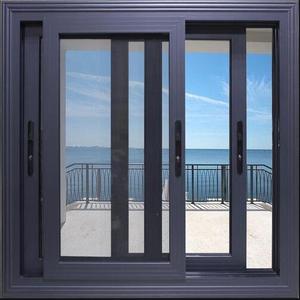
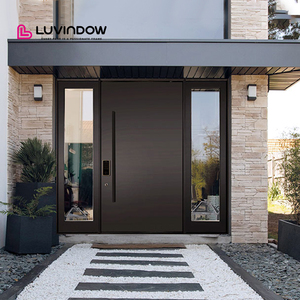
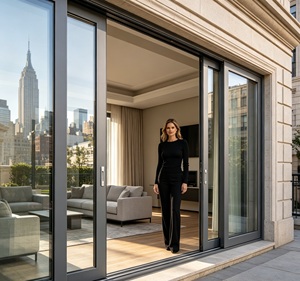
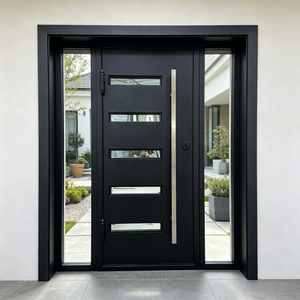
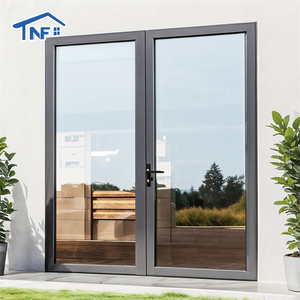
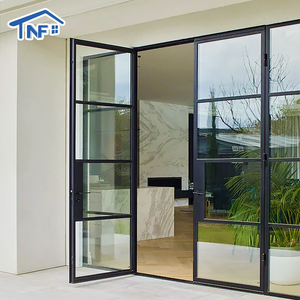
Architectural Engineering Criteria for Aluminium Casement Systems
An authoritative guide to selecting, specifying, and evaluating aluminum casement suppliers for high-wind exposure, coastal salt resistance, and energy efficiency compliant with global standards.
1. Critical Performance Metrics: Beyond Basic Sash Aesthetics
When procurement officers, facade engineers, and general contractors evaluate an aluminium casement windows supplier, structural integrity under dynamic wind load (ASTM E330 / AS2047) is paramount. Casement windows provide superior sealing capabilities compared to horizontal sliding systems because the operable sash compresses directly against the perimeter gasket under positive atmospheric pressure.
Our engineering matrix integrates three-tier EPDM continuous perimeter seals, multi-chambered polyamide thermal break strips (PA66 GF25), and structural siliconized glazing. These mechanical parameters eliminate air infiltration (ASTM E283) and water ingress (ASTM E331) during extreme monsoon or hurricane conditions.
| Performance Criterion | DERCHI Engineered Standard | Generic Market Equivalent | Architectural Consequence |
|---|---|---|---|
| Alloy Metallurgy | Primary 6063-T5 / 6063-T6 (Wall thickness ≥ 2.0mm) | Secondary/Recycled Scrap Billets (≤ 1.4mm) | Prevents frame torsion, sash sag, and hardware pulling failure under gusting loads. |
| Thermal Insulation | Polyamide PA66 GF25 Isobaric Strip (Uw ≤ 1.4 W/m²·K) | Uninsulated Hollow Profile or Recycled PVC | Eliminates internal surface condensation and reduces building HVAC cooling demands by up to 38%. |
| Anti-Intrusion Hardware | Patented 4-Side 6-Point Multi-Locking Transmission Rods | Single-Point Zinc Die-Cast Latches | Uniform perimeter pull-in pressure, tamper resistance, and resistance to pry attacks. |
| Glazing Integration | Double/Triple Tempered Low-E with Argon Gas (Warm Edge) | Standard Monolithic or Float Annealed Glass | Enhanced acoustic reduction (Rw up to 42 dB) and high Solar Heat Gain Coefficient (SHGC) control. |
2. Future Procurement Trends Shaping Global Fenestration (2025-2030)
The global facade industry is shifting rapidly toward stringent decarbonization, whole-house automation, and structural climate resiliency. Commercial real estate developers and residential villa contractors must account for key procurement trends when vetting an export partner:
Carbon-Neutral Metallurgy
International environmental assessments (LEED, BREEAM) are penalizing high embodied-carbon products. Global buyers are mandating hydro-powered smelter aluminum with low-carbon declarations and recyclable alloy components.
Super-Slim Architectural Frames
Minimalist sightlines (profiles under 45mm face width) combined with structural load performance allow larger glazed surfaces, increasing daylighting without sacrificing AS2047 structural compliance.
Integrated Micro-Ventilation & Smart Actuators
Modern casements are merging concealed electric chain actuators and wind/rain sensor automation, allowing facade-integrated passive cooling strategies without compromising multi-point security integrity.
Why Top Global Contractors Source From DERCHI
Guangdong Dejiyoupin Doors and Windows Co., Ltd. operates at the global epicenter of structural aluminum manufacturing in Foshan, China. We bridge industrial capacity with custom architectural precision.

100+ Proprietary Patents
Includes our patented Four-Side Six-Point locking mechanism, delivering world-class anti-burglary performance, airtight sealing, and long-term hardware reliability under constant cycle loads.

Zero-Error 360° Quality Control
From ultrasonic profile wall-thickness testing and extrusion corner crimping verification to argon-gas retention checks, our intelligent manufacturing eliminates site-fitting discrepancies.

Xinhua Certified Brand
Formally recognized as a "China Famous Brand" by Xinhua News Agency, DERCHI represents national-scale manufacturing rigor, financial stability, and brand longevity for multi-year project contracts.

Full International Compliance
Our window and door lines are fully tested and certified to CE (EU), NFRC & Energy Star (North America), AS2047 (Oceania), CSA (Canada), and ISO 9001 factory production standards.

Unified Architectural Envelopes
Harmonize sightlines, RAL color matching, and anodizing finishes across casements, panoramic pivot entrance portals, bifold systems, and engineered sunrooms from a single verified factory.
Damage-Free Export Crating
Units are wrapped in scratch-proof films, protected by heavy molded corner caps, and crated in fumigated maritime plywood with floor-by-floor site assembly labeling.
Frequently Asked Questions on Casement Window Procurement
Clear, definitive technical answers addressing global shipping logistics, site adaptation, quality tolerances, and installation compliance.