25+
Years Engineering Expertise
180,000 m²
Intelligent Production Hub
18,000+
Global Projects Completed
100+
National Structural Patents
Certified High-Performance Aluminium Doors & Mesh Enclosure Portfolio
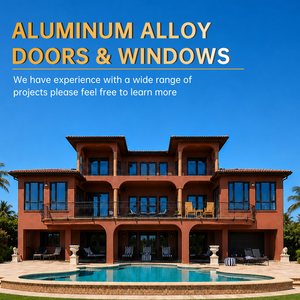
Engineered for villa developments, luxury coastal residences, and heavy-traffic commercial storefronts. Every assembly integrates heavy-duty 6063-T6 or 6060 primary aluminum, certified hurricane load dampeners, and multi-point perimeter locking hardware.
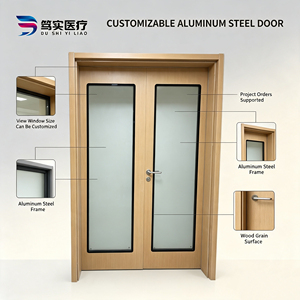
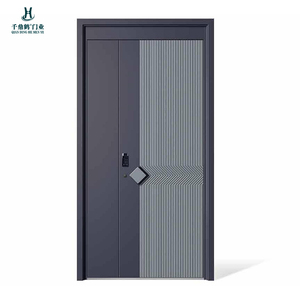
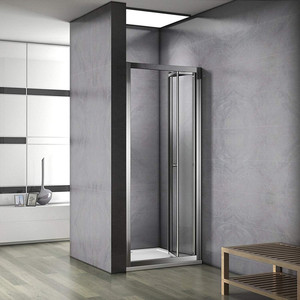
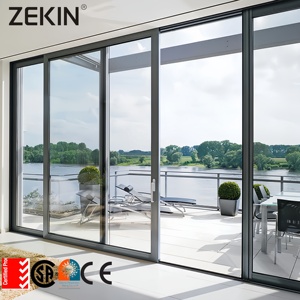
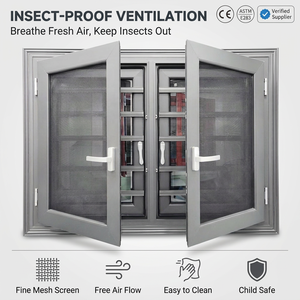
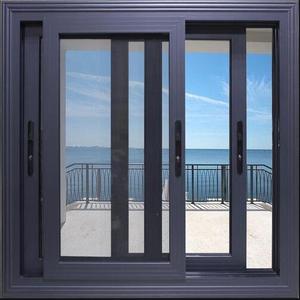
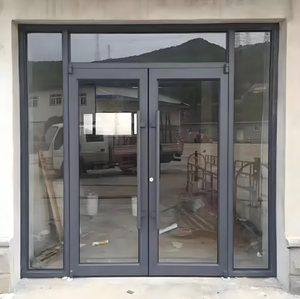
Engineering Superiority: Structural Mechanics of Aluminium Security Mesh Doors
A rigorous examination of metallurgy, shear force resistance, and surface passivation standards required for critical building envelope protection.
In international architectural fenestration, the specification of an Aluminium Mesh Door system has evolved far beyond conventional insect screening. Modern commercial and high-end residential engineering views these assemblies as a multifunctional, structural barrier: an active security shield, a solar heat gain coefficient (SHGC) moderator, and an essential passive ventilation conduit. When evaluating leading China aluminium mesh door exporters, procurement teams must look past basic profile dimensions and scrutinize the mechanical interplay between extruded aluminum chassis metallurgy, high-tensile stainless steel weave tension, and anti-electrolytic isolation barrier clamping.
Standard market offerings frequently suffer catastrophic failure in marine, tropical, or high-pollution atmospheres due to galvanic corrosion occurring along the contact interface between stainless steel wire mesh (typically 304 or 316 marine grade) and the structural 6063-T6 aluminum extrusion. As a premier exporter, our production lines utilize proprietary heavy-duty clamp bead designs combined with synthetic non-conductive Santoprene or EPDM isolation gaskets. This isolation technique breaks the galvanic bridge entirely, guaranteeing that dynamic moisture, coastal salt spray, and atmospheric salinity do not compromise metal integrity or yield tensile strength over decades of high-exposure life cycles.
316 Marine-Grade Mesh
Woven from ultra-high tensile 0.8mm-1.0mm 316 stainless steel wire exhibiting 900+ MPa tensile strength to stop manual knife penetration and crowbar leverage.
Multi-Point Perimeter Locks
Patented Four-Side Six-Point locking hardware distributes lateral jemmy forces evenly across the sub-frame, passing rigorous forced-entry resistance benchmarks.
Thermal Barrier Design
Polyamide PA66 insulating ribs thermally isolate indoor and outdoor frame extrusions, dramatically lowering U-values to meet tight global green building criteria.
Dynamic Impact Damping
Meets AS2047, AS5039, and ASTM hurricane debris velocity requirements through mechanical anchor retention and specialized perimeter tension channels.
Export Technical Benchmark: Aluminium Mesh Door Performance Matrix
| Engineering Attribute | Standard Export Specification | Heavy-Duty Coastal / Storm Grade | Testing Verification Standard |
|---|---|---|---|
| Alloy Composition | 6063-T5 High Purity Extrusion (1.4 - 1.8mm) | 6063-T6 / 6060 Architectural Grade (2.0 - 2.5mm) | GB/T 5237, ASTM B221 |
| Security Mesh Medium | 0.8mm AISI 304 High-Tension Mesh | 0.9mm - 1.0mm Marine-Grade AISI 316 Mesh | AS 5041 (Knife Shear & Dynamic Impact) |
| Surface Coating | Architectural Powder Coating (60-80μm) | AkzoNobel / PPG PVDF Fluorocarbon (≥35μm, 3-Coat) | AAMA 2605, 3000hr Neutral Salt Spray |
| Locking Mechanism | Dual-Point Hook Interlock System | Patented 4-Side 6-Point Burglary Defense Mortise | EN 1627-1630 (RC2 / RC3 Compliance) |
| Acoustic Attenuation | Rw 28 dB (Standard Mesh Configuration) | Rw 36 dB (Integrated Double Glazed + Mesh Screen) | ISO 10140-2, ASTM E90 |
Future Procurement Trends: Where The Global Fenestration Market Is Headed
Strategic demand shifts across North America, Latin America, Europe, Australia, and the Middle East dictate tighter compliance, material transparency, and system modularity.
1. All-in-One Multi-Layer Hybrids
Developers are eliminating separate secondary fly screens. Demand is pivoting rapidly to multi-track unibody frames holding thermal-break insulated Low-E glass, motorized blackout louvers, and structural 316 security mesh inside a single integrated master subframe.
2. Stringent Building Decarbonization
Green architectural certifications (LEED, BREEAM, Passive House) require comprehensive cradle-to-gate Environmental Product Declarations (EPDs). Sourcing from China now focuses on extruders leveraging clean-energy recycled aluminum billets to shrink embodied carbon.
3. Extreme Climate Resiliency Testing
Climate instability drives strict adoption of localized codes: Florida High Velocity Hurricane Zones (HVHZ), Australia AS2047 cyclonic impact, and South American seismic joint deflection allowances. Importers require tested, fully validated physical engineering test reports.
Procurement leaders are actively mitigating international supply chain risk by moving past trading intermediaries and contracting directly with vertically integrated Chinese manufacturers capable of managing end-to-end tooling, precision CNC machining, mesh tensioning, robotic assembly, and seaworthy moisture-proof crating. By centralizing fabrication in Foshan—China’s epicenter of aluminum fabrication—engineering teams maintain total control over thermal break strip alignment, anodizing micron consistency, and zero-defect packing layouts matched precisely to the contractor’s opening schedule.
Enterprise Advantages: Why Tier-1 Contractors Rely On DERCHI
Combining world-class production infrastructure in Foshan with an unwavering zero-error quality assurance mandate recognized by Xinhua News Agency and international testing institutes.
180,000 m² Production Base
Operating one of Foshan’s most advanced fenestration manufacturing hubs, outputting more than 1,000,000 m² of doors, windows, and security systems annually with lean industrial consistency.
360° Intelligent Quality Control
From metallurgical spectrometer audits on incoming aluminum billets to automated 3,000-cycle hardware endurance cycling, every order passes rigid multi-stage zero-defect checkpoints.
100+ Patents & National Honors
Certified as a "China Famous Brand" by Xinhua News Agency. Inventor of the proprietary Four-Side Six-Point anti-theft locking technology engineered for premier villa security.
Multi-Jurisdiction Certifications
Products tested and certified to CE (Europe), NFRC & Energy Star (USA), AS2047 (Australia), CSA (Canada), and ISO 9001 quality management across our door, mesh, and curtain wall catalog.
Trusted by Global Hospitality
Engineering partner of choice for premier projects including Hilton Hotels, Atour Hotels, Beverly Hills luxury residences, and over 18,000 landmark developments in 80+ countries.
Seaworthy Crating & Export Support
Every frame is wrapped in anti-scratch protective film, corner-guarded, and crated in fumigated plywood structures with project-level barcoding for streamlined job-site installation.
Frequently Asked Questions: Global Aluminium Mesh Door Procurement
In-depth technical answers addressing engineering tolerances, freight logistics, corrosion protection, and project compliance for commercial architects and purchasing directors.
What mechanical and metallurgical properties distinguish security mesh doors from standard flyscreen doors?
Standard flyscreen systems utilize low-gauge PVC-coated fiberglass or pliable aluminum wire (0.2–0.3mm diameter) secured by a soft vinyl spline. They offer insect containment but fail instantly under minimal mechanical force or physical shear. In contrast, heavy-duty architectural security mesh doors use structural 6063-T6 aluminum extrusions (wall thickness ≥2.0mm) housing high-tensile 0.8mm to 1.0mm 304 or 316 marine-grade stainless steel wire mesh woven to 900+ MPa tensile strength. Rather than vinyl splines, the mesh is locked into an internal perimeter channel via deep continuous mechanical screw-clamp wedges or high-adhesion structural bonding compounds. This configuration absorbs repetitive dynamic impacts exceeding 100 Joules, passes knife-shear tests (AS5041), and resists sustained prying attacks.
How does DERCHI prevent galvanic corrosion between the stainless steel mesh and the aluminum frame?
When dissimilar metals such as stainless steel (higher electrode potential) and aluminum (lower electrode potential) contact in the presence of an electrolyte (atmospheric moisture or coastal airborne salt), rapid galvanic corrosion deteriorates the aluminum perimeter. DERCHI eliminates this risk by engineering complete non-conductive dielectric isolation barriers. The mesh edges are wrapped in specialized UV-stabilized Santoprene/EPDM insulating gaskets and fixed with anti-friction polymeric wedge strips. Fasteners are Grade 316 stainless steel with synthetic insulating washers. Furthermore, aluminum frames undergo complete pretreatments and architectural-grade AkzoNobel powder coating or multi-coat PVDF fluorocarbon finishing (AAMA 2605 compliant), achieving over 3,000 hours of Neutral Salt Spray (NSS) chamber resistance.
Can your aluminum mesh doors comply with regional hurricane, seismic, and building codes (AS2047, NFRC, CE)?
Yes. DERCHI custom-engineers each series around destination codes. For the Australian and New Zealand markets, our products meet AS2047 and AS5039/5041 testing standards covering air infiltration, water penetration resistance, and dynamic deflection under severe wind loads. For high-velocity storm zones such as the Caribbean and Florida (HVHZ), we supply certified impact-resistant configurations featuring reinforced aluminum mullions, structural sub-sills, and laminated safety glass. For seismic regions (such as Chile, Peru, and Japan), we calculate building joint movement and supply specialized perimeter expansion receptors to absorb lateral inter-story drift without frame binding or structural failure.
What is the standard production lead time, container stuffing protocol, and ocean transit timeline?
Our typical manufacturing cycle is 25 to 35 days following shop drawing sign-off and receipt of deposit. Standard lead times account for custom profile extrusion, thermal break assembly, precision 45/90-degree CNC cutting, mesh tensioning, and 100% pre-assembly inspection in our Foshan facility. For ocean logistics, frames are wrapped in multi-layer PE scratch film, sealed in heavy air-cushion bubble wrap, reinforced with high-density impact corner protectors, and loaded into fully enclosed, fumigated marine-grade plywood crates. Transit times from South China ports (Shenzhen/Guangzhou/Foshan) average 14–22 days to the US West Coast/Oceania, 28–35 days to Europe/US East Coast, and 35–45 days to South American destinations (Santos, Callao, San Antonio).
How are large-scale projects supported in terms of architectural shop drawings and installation guidance?
Our dedicated engineering department provides full technical consultation throughout project lifecycles. We review architectural elevation blueprints (AutoCAD / Revit BIM models) and generate comprehensive 1:1 shop drawings showing structural anchoring details, perimeter sealant joints, rough opening tolerances, structural mullion calculations, and sub-frame integration. Every crated unit is marked with individual opening tags (matching floor and room schedules). We deliver comprehensive 3D visual installation manuals, video walkthroughs, and real-time remote video engineering support for job-site managers. On qualified commercial developments, DERCHI deploys bilingual technical engineers to site to oversee initial frame installation and provide local crew training.
Partner with China's Premier Aluminium Mesh Door Exporter
Whether you require complete villa window packages, hurricane-grade sliding mesh screens, or commercial custom extruded security entrances, DERCHI's engineering team will review your drawings and provide an optimized technical proposal within 24 hours.
Contact Us