Featured Industrial & Residential Fenestration Systems
Precision-extruded architectural assemblies certified to international building codes, including AS2047, NFRC, CE, and Florida Hurricane impact thresholds. Explore our fully vetted profile series engineered for extreme structural deflection and thermal insulation.
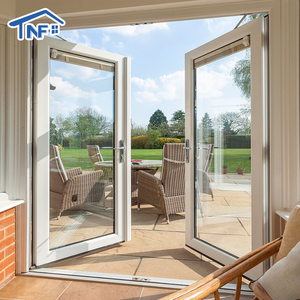
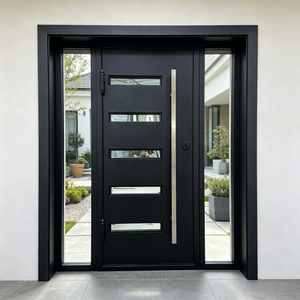
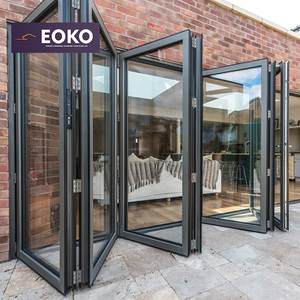
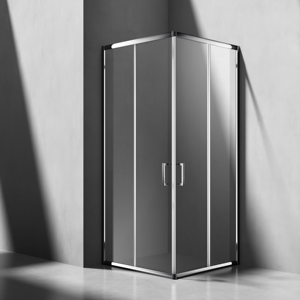
Navigating the Global Aluminum Casement Windows Supply Chain
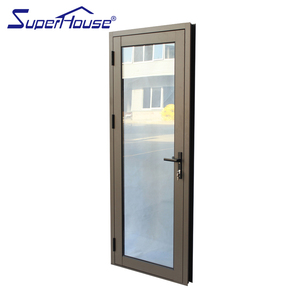
In modern building envelope engineering, specifying an aluminum casement window transcends simple aesthetic selection. A casement window operates via side-mounted hinges, projecting outward or inward through manual roto-gear cranks or European concealed friction stays. Because the sash compresses mechanically against continuous perimeter elastomeric gaskets upon locking, casement fenestration yields the highest air-impermeability and water-penetration resistance among all operable window styles.
Global facade project directors, structural engineers, and commercial developers face significant supply chain volatility. Selecting the ideal manufacturer requires scrutinizing architectural extrusion alloys (predominantly 6063-T5 vs. 6063-T6), polyamide thermal break strip integrity (such as PA66 GF25), multi-point mechanical lock hardware, and international performance certifications like AAMA/WDMA/CSA 101/I.S.2/A440 in North America, AS2047 in Australasia, and EN 14351-1 across the European Union.
Top 10 Global Aluminum Casement Window Manufacturers: Technical Matrix
Benchmarking criteria cover thermal barrier construction, maximum structural wind load rating (Design Pressure - DP), acoustic isolation (STC/OITC), and verifiable testing regimes.
| Manufacturer / Brand | Primary Origin | Thermal Tech (Polyamide Strip) | Glass Unit Capability | Max DP Wind Load | Key Target Accreditations |
|---|---|---|---|---|---|
| DERCHI / Deji Doors & Windows | Foshan, China | Multi-Chamber PA66 GF25 (up to 34mm) | Triple Low-E + Argon / Impact Laminate | DP70 - DP100 (5000 Pa) | NFRC, AS2047, CE, ISO9001, Energy Star |
| Schüco International | Bielefeld, Germany | Modular Isolator with Foam Composite | Triple / Quadruple Glazing Systems | Class C5 / B5 (EN 12210) | DIN Standards, CE, Passive House PhA |
| Reynaers Aluminium | Duffel, Belgium | High-Insulation Polytex Co-extrusion | Double / Triple Acoustic Laminate | Class 4 Air / E900 Water | Qualicoat, CE, Cradle to Cradle Certified |
| Kawneer (Arconic) | Norcross, GA, USA | IsoWeb Thermal Isolator System | Insulated Monolithic / Impact Laminated | AAMA CW-PG60 to AW-PG80 | AAMA, NFRC, Miami-Dade NOA |
| YKK AP America | Tokyo, Japan / USA | ThermaBond Plus Mechanical Interlock | High-Performance Dual Glazed IGU | DP65 Windborne Debris | LEED Contributing, NFRC, ASTM E1886/1996 |
| Wicona (Hydro Group) | Ulm, Germany | Hydro CIRCAL Recycled Polymeric Strips | Architectural Acoustic Glazing | Class 4 / E1200 / C5 | ISO 14001, Passive House Institute |
| Alumil Systems | Kilkis, Greece | Supreme Thermal Barrier Insertion | Double / Triple Solar Control Glazing | Class C4/B4 (2400 Pa) | IFT Rosenheim, CE, AAMA Standards |
| Oldcastle BuildingEnvelope | Dallas, TX, USA | Pour & Debridge / Thermal Strut Poly | Custom Low-E / Laminated SentryGlas | AW-PG70 Structural Limit | AAMA, ASTM, IGCC Certified |
| Cortizo Aluminium Architecture | Padrón, Spain | Tubular Polyamide Strut 24mm-38mm | Acoustic Safety Multi-Layer | Class C5 / 1800 Pa Dynamic | Qualanod, CE Mark, AENOR Certified |
| Technal (Hydro Building Systems) | Toulouse, France | Soleal High Thermal Breaking Strip | Solar Dynamic Glass compatible | Class 4 / 9A / C5 | BREEAM Compliant, CSTB, CE |
Anatomy of High-Performance Aluminum Casement Fenestration
Understanding how cross-sectional geometry, alloy temper, and locking points prevent envelope degradation under severe differential air pressure.
Multi-Chamber Polyamide Barriers
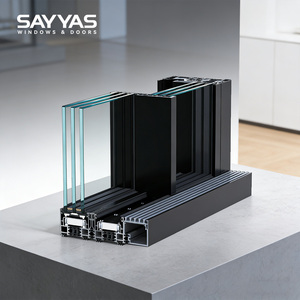
Standard aluminum conducts thermal energy at roughly 205 W/m·K. To achieve architectural Passive House benchmarks, our advanced extrusions embed glass-fiber reinforced PA66 strips, breaking thermal paths and dropping frame U-values ($U_f$) below 1.2 W/m²·K.
Isobaric Gasket Sealing Matrix
Utilizing high-tensile cellular EPDM gaskets installed in three unbroken lines (exterior weather seal, central rain-screen gasket, and interior acoustic damper), water ingress is neutralized through the pressure-equalization principle without siphon backflow.
Patented Multi-Point Locking
In cooperation with enterprise locking patents such as our Four-Side Six-Point security engagement, casement sashes distribute latching pressure symmetrically along the entire perimeter, counteracting negative wind suction during super typhoons and hurricanes.
Guangdong Dejiyoupin Doors & Windows: Direct Manufacturing Powerhouse
Operating from Foshan, Guangdong—the epicentre of precision aluminum extrusion—DERCHI represents over a quarter-century of industrial engineering, trusted across 18,000+ landmark hospitality, villa, and high-rise developments globally.
Contracting through a verified manufacturer like Guangdong Dejiyoupin Doors and Windows Co., Ltd. (DERCHI) eliminates intermediaries, ensuring end-to-end trace integrity. Certified as a "China Famous Brand" by Xinhua News Agency, DERCHI couples automated CNC 45-degree angle cutting, seamless corner injection bonding, and robotic robotic sealing lines with our proprietary 360° Quality Control System. Every aluminum profile billet undergoes chemical spectrometry analysis before thermal extrusion to confirm 6063 alloy purity and T5/T6 temper uniformity.
Our comprehensive overseas engineering references span prestigious global luxury hotels (such as Hilton Worldwide and Atour Hotels) along with premier residential master-planned communities across North America, Australasia, Europe, and South America (including seismic zones in Chile and coastal high-humidity corridors in Brazil and Colombia).
Key Sourcing Trends Transforming the Casement Fenestration Sector
Global building codes continue tightening around energy consumption, operational carbon, and structural resilience. Sourcing directors must anticipate these evolving regulatory shifts.
Embodied Carbon & Recycled Alloys
Architects increasingly demand Environmental Product Declarations (EPDs) with aluminum extrusions containing upwards of 75% post-consumer scrap, drastically reducing project Scope 3 emissions.
Micro-Ventilation & Smart Actuation
Integration of concealed 24V DC motorized operators coupled to Building Management Systems (BMS), driving automated night purge cycles and indoor air quality sensors without compromising structural locks.
Vacuum Insulated Glazing (VIG)
Transitioning from heavy argon-filled triple glazing to hybrid VIG units. This slashes sash dead loads by 40% while achieving center-of-glass U-values as low as $U_g = 0.5$ W/m²·K in slim profiles.
Seismic Drift & Hurricane Interlocking
Severe climate resilience requires dual-rated systems accommodating inter-story seismic building drift (up to 2.5% drift ratio) alongside large missile impact ratings (TAS 201/202/203).
Frequently Asked Technical Questions by Fenestration Importers
Clear, expert-level technical answers addressing testing metrics, ocean logistics protection, hardware cycles, and compliance verification.
What structural and thermal testing standards must be verified before sourcing overseas aluminum casement windows?
How do thermal break casement windows prevent condensation in high-humidity or sub-zero climates?
What surface finishes provide optimal protection against salt-fog corrosion in coastal environments?
How are heavy architectural casement assemblies packed to guarantee zero-damage ocean transit?
What cycle testing should be verified for casement window friction stays and multi-point gears?
Can custom structural mullions and jamb extensions be accommodated for high-velocity hurricane zones?
Request Project-Specific Engineering & Factory Pricing
Accelerate your project schedule with factory-direct supply, custom shop drawings (CAD/BIM), structural calculations, and complete bill of materials from our senior engineering team in Foshan.