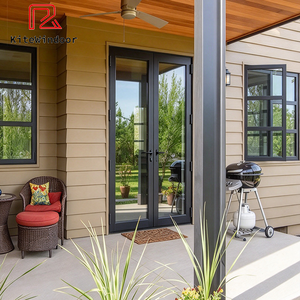
Commercial & Residential Portfolio
Featured OEM Aluminum Bathroom & Partition Door Systems
Precision-machined from corrosion-resistant 6063-T5 aluminum-magnesium alloys. Designed for luxury hospitality guest rooms, modular residential apartments, and high-humidity interior environments worldwide.
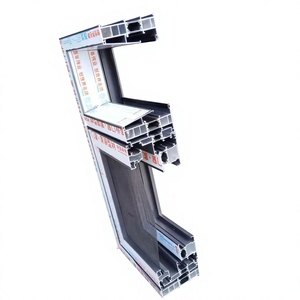
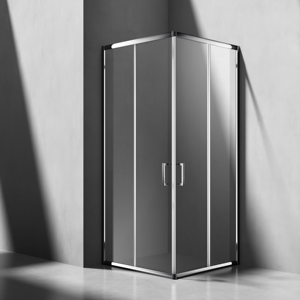
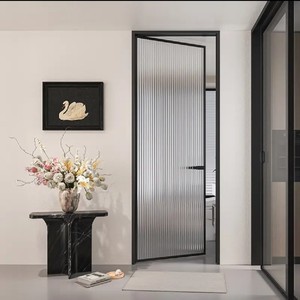
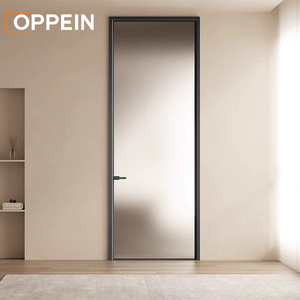
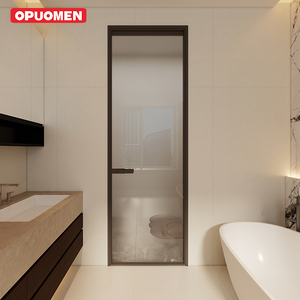
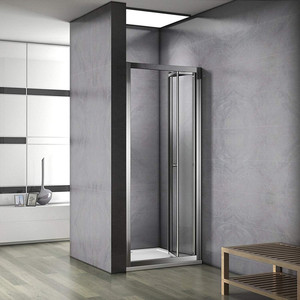
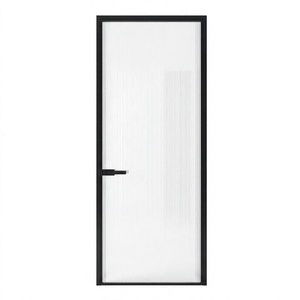
The Engineering Blueprint: Why Modern Architecture Prioritizes Custom OEM Aluminum Systems in Bathroom Environments
In commercial construction, multi-family high-rises, and luxury hospitality developments, the interior wet-room door is consistently subjected to the most demanding operating conditions within the architectural envelope. Unlike exterior facades that combat cyclical diurnal weather, bathroom and laundry exit partitions face permanent relative humidity differentials (often exceeding 85% RH inside the wet cell), caustic aerosol detergents, and high-frequency cyclical usage. For global real estate developers, contractors, and project procurement teams, moving away from conventional timber, hollow-core wood composites, and substandard PVC toward customized OEM aluminum bathroom doors has evolved from an aesthetic upgrade into a fundamental risk-mitigation strategy.
Information Gain Directive for Project Specifiers: Aluminum-magnesium alloys (such as virgin 6063-T5) present a zero-swelling coefficient in high-humidity zones. When combined with multi-chamber thermal breaks and fluorocarbon electrostatic powder coating, aluminum doors eradicate the delamination, rot, paint peeling, and hinge binding that plague timber alternatives in tropical, coastal, and unventilated wet-room environments.
Current Procurement Dynamics & Global Market Shifts
Global supply chains for architectural interior doors have seen a decisive structural shift over the past 36 months. Commercial developers across North America, Europe, Australia, and South America are standardizing interior door schedules under stringent environmental and acoustic performance criteria. Where bathroom doors were historically treated as commoditized site-measured joinery, modern developers now insist on precision factory-prehung systems manufactured under controlled tolerances (±0.5mm).
Three dominant factors drive this international procurement transition:
Total Lifecycle Cost Analysis
While timber interior doors may feature marginally lower initial bill-of-materials costs, their service maintenance, swelling rectifications, and premature replacements in wet zones compound hospitality operating costs by 42% over a seven-year operational horizon.
Prefabrication & Off-Site Assembly
Modular bathroom pods and fast-track hospitality developments require complete pre-hung aluminum door cassettes—complete with sub-frames, integrated acoustic gaskets, and pre-milled magnetic locksets—reducing site labor by over 60%.
Acoustic Privacy Standards
High-density residential and four/five-star hospitality guidelines require guest-room bathroom acoustic dampening between STC 32 and STC 38. This is achieved via thermal-break cavities, laminated acoustic glass, and perimeter dual-lip EPDM compression seals.
Future Technology & Manufacturing Trends (2025–2030 Horizon)
The aluminum bathroom door sector is experiencing rapid metallurgical and mechanical innovation. As an OEM factory serving enterprise clients across six continents, we track and engineer directly for the technological evolutions reshaping the architectural landscape:
1. Ultra-Narrow Sightline Profiles (Ghost Frames): The demand for minimalist interiors has accelerated the adoption of visible profile sightlines reduced from 45mm to 16mm or less. Achieving this structural rigidity requires premium 6063-T6 or 6061 magnesium-aluminum alloys with thickened web geometry (1.8mm–2.5mm inner wall thickness) to withstand torsional loads during heavy tempered glass installations.
2. Smart Privacy Switchable Glazing (PDLC Integration): Polymer Dispersed Liquid Crystal (PDLC) technology is rapidly transitioning from commercial boardrooms directly into hotel ensuite bathrooms. Integrated smart glass switches from opaque to optical clarity via wall controls or room automation, requiring hidden wiring channels through the aluminum door pivot or hinge assembly without compromising water ingress seals.
3. Silent Magnetic Hardware & Concealed Pivot Hinges: Traditional mechanical spring latches generate metallic impact noise that disturbs sleeping guests. Next-generation OEM bathroom doors integrate neodymium magnetic latch strike plates that recess automatically until flush closure, combined with 3D-adjustable concealed pivot hinges that eliminate exterior visual clutter and resist continuous steam exposure.
4. Marine-Grade Corrosion Surface Coatings: Standard anodizing coatings often pit when exposed to chlorine-based bathroom cleaning agents or saline coastal atmosphere. The shift toward Qualicoat Class 2 architectural powder coats, PVDF fluorocarbon finishes, and deep micro-arc oxidation ensures that door systems maintain surface integrity under 3,000+ hours of continuous neutral salt spray (NSS) testing.
Material Performance Matrix: Commercial Wet-Room Application
| Evaluation Parameter | DERCHI OEM Aluminum System | Solid Engineered Timber | Standard UPVC / Plastic Profile |
|---|---|---|---|
| Dimensional Stability under 90% RH | 100% Zero expansion; zero structural deflection | Prone to hygroscopic swelling, warp, and jamming | Moderate expansion; susceptible to thermal sag |
| Resistance to Steam, Mold & Corrosion | Inert; Class 2 Qualicoat / Anodized layer; zero mold | Pores harbor mildew; rot requires chemical refinish | Impervious to water; yellowing under UV exposure |
| Hardware Load Bearing (Heavy Glass) | High structural shear rating; supports 8mm-12mm glass | Adequate shear; screw pullout risk in moist wood | Low structural rigidity; requires steel internal liners |
| Acoustic Attenuation (STC Rating) | STC 32 – STC 38 with dual seals and insulated glass | STC 28 – STC 32 dependent on core density | STC 22 – STC 26 hollow chambers transfer sound |
| Fire Retardancy & Toxicity | Non-combustible (Class A1 / EN 13501-1 compliant) | Combustible; requires intumescent strip treatments | Melts under high heat; releases toxic HCl gas fumes |
| Expected Service Life (Hospitality) | 25+ Years with minimal hardware lubrication | 5–8 Years before mandatory surface refurbishment | 7–10 Years before frame yellowing or embrittlement |
Enterprise Engineering Heritage: Guangdong Dejiyoupin Doors & Windows Co., Ltd.
Headquartered in Foshan, Guangdong—the worldwide epicenter of precision aluminum extrusion and advanced fenestration—Guangdong Dejiyoupin Doors and Windows Co., Ltd. operates a specialized 180,000 square meter intelligent production complex with over 600 highly trained fenestration technicians, metallurgists, and structural engineers. Certified as a prestigious "China Famous Brand" by Xinhua News Agency, our factory delivers over 1,000,000 square meters of high-performance architectural systems annually.
Our custom OEM manufacturing platform has been verified across more than 18,000 landmark developments worldwide, including prestigious hospitality brands such as Hilton Hotels, Atour Hotels, Beverly Hills, Ruyi Lake, and Emerald City. For international project managers and general contractors, our facility provides end-to-end, zero-error engineering guarantees:
- Patented Security & Mechanical Integrity: Holding over 100 independently developed national patents, including our signature Four-Side Six-Point locking mechanism, our bathroom and partition systems leverage exclusive high-strength structural extrusions that prevent frame deflection over decades of high-cycle operation.
- International Regulatory Conformance: Our comprehensive door and window systems maintain rigorous third-party certifications including European Union CE conformity, American NFRC energy ratings, Australian AS2047 fenestration standards, Canadian CSA approval, and ISO 9001 certified quality management systems.
- Turnkey OEM & Whole-Building Envelope Customization: We offer custom structural profiles, extruded handle integrations, tailored RAL color matching, frosted/reeded/tinted architectural glazing, and complete modular shipping kits with floor-by-floor site coding.
From our deep-water port logistics partners shipping directly to major international terminals—including Santos, Buenos Aires, Callao, Los Angeles, Rotterdam, and Sydney—our engineering documentation, 3D CAD/BIM shop drawings, and on-site technical installation support eliminate overseas procurement ambiguity from drawing approval to final site inspection.
Technical FAQ
Frequently Asked Procurement & Engineering Questions
Detailed answers to common questions asked by architects, procurement directors, and hotel project managers regarding custom OEM aluminum bathroom doors.
Q What aluminum alloy and wall thickness do you specify for high-traffic hotel bathroom doors?
We utilize primary 6063-T5 or 6063-T6 virgin aluminum-magnesium alloys. For commercial hospitality projects, frame structural profiles feature a calibrated wall thickness of 1.6mm to 2.2mm. This ensures rigid corner joinery, eliminates sagging when supporting heavy 8mm–10mm tempered architectural glass, and accommodates concealed hydraulic closers without frame flexing.
Q How do your bathroom door systems prevent water leakage and ensure acoustic privacy?
Our systems feature three lines of defense: continuous co-extruded EPDM weatherstripping that does not crack over time, engineered silicone bottom drop-down sweep seals (automatic threshold drop seals), and multi-chamber hollow profiles. When configured with double-glazed laminated glass, our doors achieve sound attenuation ratings up to STC 36, ensuring complete guest privacy.
Q Can your factory manufacture custom sizes, glass finishes, and branded hardware cutouts?
Yes. As a pure OEM/ODM manufacturing facility, every unit is built to project specifications. We support custom heights (up to 3.0 meters floor-to-ceiling), special glass options (frosted, ribbed Moru, smoked gray, reeded, Low-E, smart PDLC switchable glass), and CNC precision cutouts for hotel RFID electronic locks, smart latches, and flush pulls.
Q What are your production lead times and ocean freight packaging standards?
Standard production cycles run 25 to 35 business days following final approved shop drawings and deposit confirmation. For ocean transit, doors are individually protected with scratch-resistant peelable protective film, corner impact guards, high-density EPE foam wrapping, and crated in fully enclosed fumigated plywood export cases tagged by building, floor, and unit number.