Engineered Aluminum Window & Architectural Door Systems
Precision-engineered extrusions fabricated from primary 6063-T5/T6 marine-grade aluminum, integrated with structural polyamide isolation breaks and certified insulated glass units (IGU).
Future B2B Procurement Trends in Commercial Fenestration (2025–2030)
As international energy codes tighten and decarbonization becomes an essential building metric, bulk window procurement is shifting rapidly toward verifiable thermal performance and localized environmental resilience.
Stringent Whole-Window U-Factors
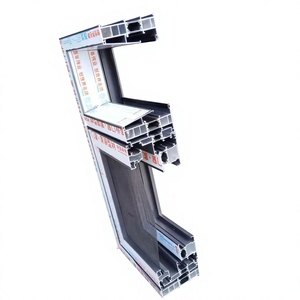
Global regulatory bodies (such as the US IECC, EU EPBD, and Australian NCC) are actively mandating whole-window U-factors below 1.4 W/m²K (U ≤ 0.25 BTU/hr·ft²·°F). Commercial buyers are abandoning standard aluminum frames in favor of complex polyamide (PA66GF25) multi-cavity thermal barriers integrated with warm-edge IGUs.
Multi-Hazard Structural Glazing
Driven by extreme climate disruption, international developers no longer procure standard tempered glass for multi-story builds. Demands have surged for verified cyclone/hurricane resistance (ASTM E1886/E1996 Large Missile Impact) paired with high seismic drift tolerance (AS/NZS 4284 and regional Pacific Rim seismic codes).
Supply Chain Audits & Traceability
Tier-1 commercial general contractors require complete lifecycle material documentation. Sourcing now emphasizes low-carbon bauxite smelting, 6063 primary alloy batch spectrometry reports, third-party acoustic testing (ASTM E90), and documented NFRC, CE, and AS2047 factory compliance audits.
Procurement Value Analysis: Total Cost of Ownership (TCO) vs. Ex-Works Unit Cost
Low-grade wholesale windows with poor polyamide integration create systemic thermal bridging, condensation pooling, and premature IGU desiccant saturation within 24 to 36 months. Specifying marine-grade powder coatings (AAMA 2604/2605 compliant), argon-filled hermetic glass units with secondary structural silicone sealing, and precision multi-point perimeter locks reduces warranty callbacks and building lifecycle envelope replacement costs by over 42%.
Evolutionary Trajectory of Aluminum Fenestration Engineering
Comparing legacy manufacturing approaches with next-generation architectural fenestration engineered by Guangdong Dejiyoupin Doors and Windows Co., Ltd.
| Engineering Vector | Legacy Aluminum Extrusions (1st Gen) | Standard Thermal Break (2nd Gen) | DERCHI Engineered Architecture (3rd Gen) |
|---|---|---|---|
| Thermal Barrier Design | None (Monolithic solid frame; Uf > 5.8 W/m²K) | Basic 14.8mm I-shaped PA66 nylon strip | Multi-chamber 24mm–34mm PA66GF25 with aerogel insulation (Uf < 1.6 W/m²K) |
| Air & Water Infiltration | Simple PVC brush seals; Air: > 1.5 m³/m²·h | Standard Santoprene/EPDM gaskets | Triple-coextruded vulcanized EPDM foam gaskets + sequential pressure-equalized drainage cavities |
| Glazing Architecture | Single plate or air-filled 4+6A+4 float glass | Standard 5+9A+5 tempered double glazing | 5Low-E + 12Ar/16Ar (Argon) + 5mm tempered with warm-edge composite spacer matrix (Ug ≤ 1.1 W/m²K) |
| Hardware & Security | Single latch, zinc-alloy pull locks | 2-point perimeter mortise lock systems | Patented 4-Side 6-Point structural locking gear; micro-ventilation + anti-jemmy security |
| Surface Durability | Standard mill finish or basic 10µm anodizing | Standard electrostatic powder coating | Fluorocarbon PVDF or AAMA 2605 marine-grade powder coating (tested for 3,000+ hrs salt-spray resistance) |
Enterprise Advantages: Foshan Precision Scale & Global Delivery
Operating from China's architectural aluminum capital, Guangdong Dejiyoupin Doors and Windows Co., Ltd. (DERCHI) combines expansive manufacturing infrastructure with rigorous precision testing standards.
Patented Multi-Point Locking
Holders of over 100 national utility patents, including our proprietary Four-Side Six-Point perimeter lock system that distributes locking pressure symmetrically to prevent frame flexing under negative wind loads.
360° Intelligent Quality Assurance
From automated profile cutting and multi-axis CNC milling to laser-aligned corner crimping and automated dual-seal IGU argon filling, our zero-error factory protocol delivers millimeter-exact opening tolerances.
Worldwide Accreditations
Products are tested and certified against CE (EU), NFRC (North America), AS2047 / AS1288 (Australia), CSA (Canada), Energy Star, and ISO 9001, providing architects, structural engineers, and local inspectors full documentation.
Whole-Envelope Coordination
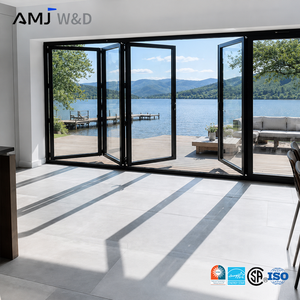
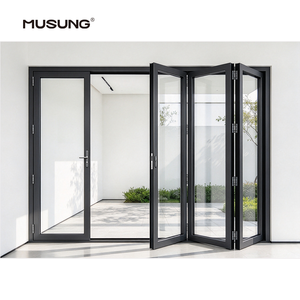
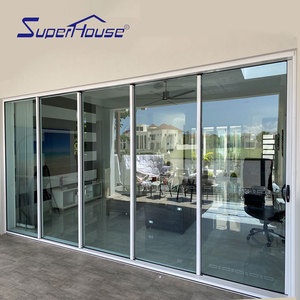
We eliminate supplier mismatches by supplying complete building packages: thermal break windows, panoramic minimal-frame sliding systems, heavy-duty exterior bifold doors, integrated glass sunrooms, and solid timber entrance doors.
Engineered Export Logistics
Every shipment utilizes multi-layer protective packaging: non-scratch static film, composite foam edge guards, moisture-resistant desiccants, and solid fumigated plywood crates packed with verified loading plans.
Proven Global References
Trusted across more than 18,000 architectural landmarks worldwide, including hospitality projects for Hilton Hotels and Atour Hotels, luxury multi-family developments, and oceanfront private estates.
Frequently Asked Questions on Importing Windows from China
Objective technical answers addressing engineering verification, manufacturing parameters, logistics, and on-site integration.
How can overseas buyers verify the thermal performance claims of double-glazed windows?
Valid verification requires testing documentation from accredited independent testing agencies (such as NFRC, Intertek, or WinSlam simulations) evaluating the complete fenestration system (U-factor, SHGC, and VLT), rather than testing center-of-glass performance alone. Our factory provides comprehensive NFRC, CE, and AS2047 simulation reports showing overall system performance, detailing how 6063-T5/T6 thermal break profiles and warm-edge double-glazed Low-E IGUs perform as an assembled unit.
What engineering provisions protect aluminum window assemblies from salt-air corrosion in coastal builds?
In high-salinity marine environments, standard powder coatings can succumb to filiform corrosion and chalking within 24 months. For coastal projects in South America, North America, the Middle East, and Oceania, we configure architectural profiles with AAMA 2604/2605 compliant fluoropolymer (PVDF) finishes or minimum 20µm architectural anodizing. All exposed screws, rollers, corner brackets, and multi-point lock mechanisms are upgraded to Marine Grade 304 or 316 stainless steel, backed by high-durability EPDM sealing gaskets.
What is the typical production lead time and maritime shipping timeline for bulk wholesale orders?
Standard fabrication lead time spans 30 to 45 business days once approved architectural shop drawings and deposits are finalized. Prototype or sample mockups can be fabricated within 12 to 15 days. Ocean transit from major South China container ports (such as Shenzhen, Guangzhou, or Foshan) ranges from 18 to 28 days to the US West Coast and Australia, and 30 to 50 days to South American destinations (Santos, San Antonio, Callao, Buenos Aires) or European distribution hubs. Full tracking schedules and milestone photos are provided at every fabrication stage.
How do your window and door systems accommodate seismic zones and extreme wind deflections?
For high-wind coastal and seismically active regions (such as the Pacific Seismic Rim covering Chile, Peru, and Western North America), our structural engineering team conducts dedicated structural wind-load and moment-of-inertia (Ixx/Iyy) calculations. Mullions are engineered with internal high-tensile steel reinforcements, paired with laminated safety glass (PVB/SGP interlayers) and expanded EPDM perimeter expansion joints designed to flex under structural building drift without compromising air or water barrier integrity.
What documentation is supplied to facilitate smooth import customs clearance and tariff preferences?
Every commercial wholesale shipment is accompanied by a complete export documentation portfolio: Commercial Invoices, Detailed Multi-Tier Packing Lists (referenced by unit markings and job-site floor schedules), Ocean Bills of Lading (B/L), Third-Party Testing Certificates, Mill Certificates for raw alloy billets, and Preferential Certificates of Origin (CO). This documentation helps buyers leverage applicable free trade agreements (FTAs) to minimize local tariffs and customs processing delays.
How does the factory prevent insulated glass units from seal failure or desiccant fogging over time?
IGU integrity is sustained via automated dual-barrier seal technology. Primary seals utilize polyisobutylene (PIB) applied robotically to block water vapor penetration, backed by a secondary structural silicone or polysulfide seal. Aluminum spacer bars are bent seamlessly at the corners rather than assembled with friction plugs, then filled with high-absorption 3A molecular sieves before receiving 90%+ pure argon gas in sealed chambers, preventing internal condensation across wide temperature swings.