Featured Architectural Aluminum Profile & Door Envelopes
Explore high-spec commercial storefront systems, heavy-duty sliding panels, ultra-narrow kitchen and interior partitions, and hurricane-rated impact systems engineered for precision architectural fit-outs worldwide.
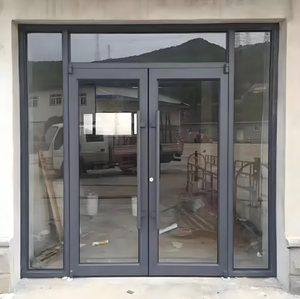
Commercial Aluminium Smart Glass Storefront Door Exterior Doors for Commercial Buildings Hurricane Impact Storefront Glass Doors
View Details →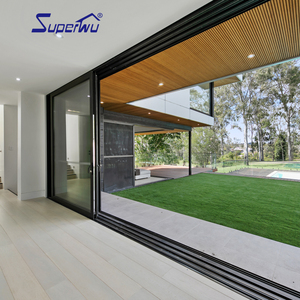
Florida Hurricane Proof Impact Rated Large Missile Sliding Patio Doors Aluminum Laminated Glass Sliding Door Impact Resistance
View Details →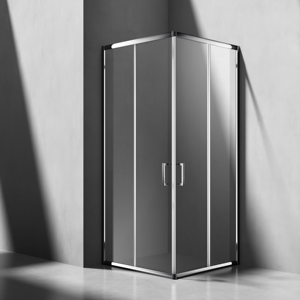
Modern Square Aluminum Alloy Waterproof Clear Tempered Glass Double Sliding Door Bathroom Shower Room Cabin
View Details →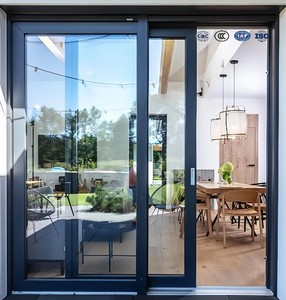
Modern Aluminum Alloy Sliding Windows and Doors with Tempered Glass Soundproof Exterior Use
View Details →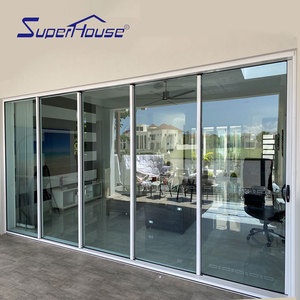
Superhouse Aluminium Door and Window with High Quality Hardware Chinese Manufacturer Lift and Sliding Door for Villa
View Details →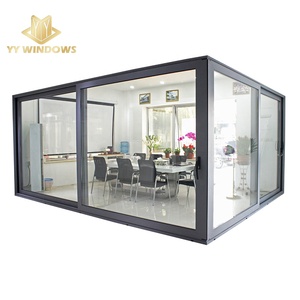
American Hurricane Windows Impact Door NFRC NOA Florida Code Aluminium Corner Lift and Slide Doors for Office
View Details →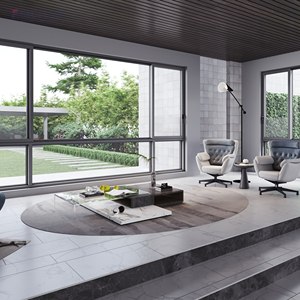
Fuson Balcony Partition Full Open Aluminium Tempered Glass Frameless Folding Sliding Glass Door and Windows
View Details →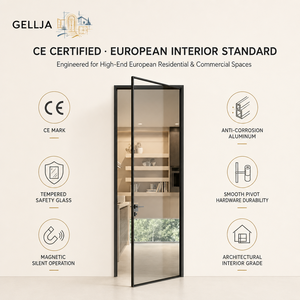
Modern French Design Narrow Frame Aluminum Glass Vertical Hinged Door for Interior Kitchen Bedroom Exterior Patio Bathroom
View Details →Engineering Whitepaper: Aluminium Kitchen Cupboard Doors & Profile Systems
In modern residential architecture and commercial kitchen millwork, the transition from traditional MDF, chipboard, and solid wood toward structural aluminium kitchen cupboard doors marks a fundamental paradigm shift. Traditional composite wood products inevitably succumb to hygroscopic swelling, formaldehyde outgassing, microbial growth, and surface delamination when deployed in tropical humid climates, coastal high-salinity zones, or high-intensity commercial wet prep kitchens. Industrial aluminium alloy extrusions—specifically primary metallurgical billet 6063-T5 and 6063-T6—provide absolute dimensional stability, zero water absorption (0.00%), exceptional strength-to-weight ratios, and an architectural lifespan spanning decades without warping.
1. Primary Billet Metallurgy vs. Secondary Scrap Extrusions
A primary criterion distinguishing tier-one China exporters like Guangdong Dejiyoupin Doors and Windows Co., Ltd. (DERCHI) from lower-tier suppliers is the origin and purity of the aluminium billet. Premium aluminium cupboard door profiles are extruded strictly from A00-grade virgin electrolytic aluminium billets (99.7% pure aluminium), alloyed with calibrated percentages of Magnesium (0.45–0.90%) and Silicon (0.20–0.60%). This strict metallurgical composition ensures a homogeneous grain microstructure during heat treatment, enabling precise T5 or T6 artificial aging. In contrast, secondary recycled scrap extrusions contain excessive tramp iron (Fe > 0.35%), leading to brittle profiles, high risk of micro-cracking at corner miter cuts, and erratic anodic oxide film thickness that exhibits streaking or premature oxidation.
| Alloy & Temper | Tensile Strength (Rm MPa) | Yield Strength (Rp0.2 MPa) | Elongation (A50mm %) | Optimal Cabinet Application |
|---|---|---|---|---|
| 6063-T5 (Standard Extrusion) | ≥ 160 MPa | ≥ 110 MPa | ≥ 8% | Ultra-slim cupboard door stiles (18mm–22mm), interior showcase frames |
| 6063-T6 (Solution Heat-Treated) | ≥ 205 MPa | ≥ 170 MPa | ≥ 8% | Heavy tall pantry pivot doors (>2.8m height), integrated structural shelf uprights |
| 6060-T6 (Precision European Standard) | ≥ 190 MPa | ≥ 150 MPa | ≥ 10% | Complex hollow profiles with micro-radii, concealed magnetic catch channels |
| 6005A-T6 (High Structural Load) | ≥ 270 MPa | ≥ 225 MPa | ≥ 8% | Floor-to-ceiling pocket sliding partitions, load-bearing cabinetry sub-frames |
2. Precision Surface Engineering: Anodizing, PVDF, and Fluorocarbon Finishes
For international procurement directors sourcing for high-end residential towers, luxury villas, and 5-star hospitality projects (such as Hilton and Atour), the surface treatment of aluminium kitchen cupboard doors dictates both aesthetic longevity and chemical resistance. In kitchen culinary environments, cabinet surfaces are exposed continuously to aerosolized cooking greases, acidic liquids (citric acid, vinegar), alkaline cleaning detergents, and abrasive micro-particles. China's leading manufacturing facilities utilize multi-stage chemical pre-treatments followed by specialized coatings:
Architectural Hardcoat Anodizing: Certified under Qualanod international standards, anodized finishes range from 12μm (Class 15) to 25μm (Class 25) thickness. By electrochemically growing an aluminium oxide layer integrated directly into the parent metal lattice, these surfaces cannot peel, flake, or chip. Anodized matte black, brushed champagne gold, and dark bronze are processed through multi-dip nickel or cobalt electrolytic coloring, providing extreme abrasion resistance and anti-static grease repellency.
Ultra-Matte Nanocoated Powder Coating: Utilizing AkzoNobel Interpon or Tiger Drylac architectural thermoset fluoropolymer powders (Qualicoat Class 2 / Class 3 certified), profiles are electrostatically coated to a uniform thickness of 60–90μm. Advanced super-durable formulations incorporate ceramic nano-spheres to deliver a "soft-touch" tactile finish that eliminates visible fingertip smudging while maintaining 3H pencil scratch hardness.
3. Hardware Engineering: Structural Corner Joints and Concealed Pivot Integration
The structural longevity of an aluminium kitchen cabinet door is determined primarily by its corner joint mechanism. Low-cost fabricators rely on self-tapping drywall screws driven directly into the extrusion screw bosses, resulting in frame sagging and misalignment within 12 to 18 months. High-precision Chinese factories employ heavy-duty die-cast zinc alloy or extruded aluminium corner brackets (cleats) that are locked via dual hex set-screws and high-tensile epoxy injection. Furthermore, modern minimalist millwork demands flush-integrated hinges. Profiles are CNC-milled to accept Italian-standard concealed pivot hinges (such as Salice Air, Blum Aventos lift systems, or Sugatsune systems), completely concealing mechanical hardware within the 18mm slim aluminium frame for a seamless floating monolithic appearance.
Future Sourcing & Procurement Trends (2025–2030)
How global developers, millwork contractors, and cabinet distributors are optimizing their supply chains through factory-direct Chinese manufacturing partnerships.
Complete "Flat-Pack" Extrusion Kit Distribution
Rather than importing assembled, bulky cabinetry that inflates container freight costs by 300%, international millwork fabricators increasingly procure precision pre-machined "knock-down" (KD) extrusion kits. Profiles arrive pre-mitered at 45°, CNC-pocketed for hinges, pre-gasketed, and accompanied by internal corner cleats, reducing ocean freight volume per kitchen by up to 75%.
Total Cost of Ownership (TCO) Prioritization
Commercial developers managing high-occupancy rental projects and luxury hotel residences are abandoning moisture-sensitive particleboard door fronts. While initial raw material procurement for aluminium profiles carries a modest premium, the elimination of water swelling, hinge tear-out, and warranty claims yields a significantly lower lifecycle cost over a 15-year operational window.
LEED & Low-Carbon Supply Chain Audits
Global architectural tenders in Europe, North America, and Australia now demand Environmental Product Declarations (EPDs) and low-embodied-carbon verification. Premier Chinese exporters utilize hydro-powered smelter aluminium billet, strict closed-loop water treatment in anodizing tanks, and 100% recyclable non-toxic materials, ensuring compliance with LEED v4.1 and BREEAM certifications.
Technological & Architectural Product Developments
The convergence of industrial minimalism, smart lighting integration, and advanced metallurgical finishes in modern kitchen cabinetry.
Micro-Slim Sightlines (18mm/20mm Profiles)
Modern interior design embraces maximum transparency and clean geometry. Next-generation kitchen cupboard doors utilize ultra-narrow structural profiles with front-face visible sightlines of just 18mm to 20mm, engineered with internal reinforcing webs that prevent frame torsion even when accommodating 3-meter tall, 8mm tempered decorative glass panels.
Integrated Co-Extruded Smart LED Raceways
Modern aluminium profiles integrate specialized extruded wiring raceways and polycarbonate optical diffuser snap-channels. Low-voltage 24V COB LED strip lighting is embedded seamlessly into the door profile itself, creating illuminated cupboard fronts with automated magnetic reed-switch activation upon door swing.
Acoustic Magnetic Soft-Close & Air Seals
Eliminating metal-on-metal clatter, contemporary door extrusions feature co-extruded Santoprene TPV or virgin EPDM perimeter gaskets. Concealed neodymium magnetic strips along the door frame ensure airtight sealing against kitchen steam, grease particles, and dust, while dampening closure sound to under 25 decibels.
Why Guangdong Dejiyoupin (DERCHI) Leads China's Export Sector
Direct from Foshan's core manufacturing zone to global commercial ports, combining 25+ years of engineering rigor with international compliance certifications.
180,000 m² Foshan Super-Factory
Operated by Guangdong Dejiyoupin Doors and Windows Co., Ltd. in Foshan, Guangdong—the epicenter of China's aluminium industry. Equipped with intelligent extrusion presses, automated CNC cutting lines, and precision assembly lines ensuring zero-error tolerances.
100+ Patented Innovations
Extensive R&D portfolio including our proprietary Four-Side Six-Point Lock mechanism, high-strength structural corner keys, and thermal break joinery systems recognized with national invention patents and industry gold awards.
Global Certification Suite
Fully certified to international building codes: European Union CE, USA NFRC and Energy Star, Australian AS2047, Canadian CSA, and ISO 9001 quality management, backed by rigorous third-party hurricane impact testing.
18,000+ Completed Projects
Proven delivery track record across 6 continents, serving five-star hospitality brands (Hilton, Atour), premier residential estates (Beverly Hills, Emerald City), and major commercial developments with zero-damage crating protocols.
B2B Buyer FAQ: Aluminium Cupboard Door Sourcing
Clear, definitive technical answers addressing lead times, shipping protection, quality inspection, and custom fabrication parameters.
For standard anodized finishes (matte black, brushed champagne, brushed gray) with approved CAD shop drawings, production cycles at our Foshan facility take between 25 and 35 calendar days. Custom powder-coated RAL finishes or specialized structural extrusion dies add approximately 10 to 14 days for die tooling, test extrusion sampling, and quality sign-off.
All aluminium profiles and glass panels undergo a 5-tier packaging protocol: (1) peelable protective film on exposed finishes, (2) shock-absorbing pearl cotton foam wrap, (3) reinforced rigid plastic corner protectors, (4) corrugated honeycomb carton encasement, and (5) fully fumigated IPPC-certified solid plywood crates reinforced with galvanized steel bands, engineered for zero movement inside 40ft HQ containers.
Yes. Our engineering department maintains digital parametric libraries for all global premium hardware manufacturers, including Blum (Aventos, Clip Top Blumotion), Salice (Air concealed hinge series), DTC, and Sugatsune. Extrusions are pre-CNC routed with micrometer-level precision (tolerance ±0.1mm) to ensure direct drop-in hardware installation on your job site.
We supply certified safety glass options compliant with SGCC (USA), CE EN 12150 (EU), and AS/NZS 2208 (Australia). Common choices include 4mm to 8mm single tempered glass in ultra-clear low-iron, European gray tint, bronze tint, fluted (Moru/reeded) decorative textures, mirror finishes, and laminated switchable smart PDLC privacy glass.
For established standard catalog profiles and in-stock anodized colors, our MOQ starts at 50 square meters (suitable for custom boutique villas). For entirely custom, client-exclusive proprietary extrusion shapes, we can open new extrusion tooling dies with a modest tooling charge, which is fully refundable once cumulative order volumes reach 5 metric tons.
Every shipment is backed by comprehensive export documentation: Bill of Lading (B/L), Commercial Invoice, Detailed Packing List, Certificate of Origin (CO, Form E, or Form A for preferential tariff duty treatment under international trade agreements), Factory Quality Assurance Inspection Reports, and independent test certificates for alloy composition and surface coat thickness.
Connect Directly with Foshan's Premier Engineering Team
Whether you are sourcing custom ultra-narrow aluminium kitchen cupboard door profiles, knock-down millwork hardware kits, or complete whole-house architectural joinery packages, our engineering team provides full shop drawing reviews, structural analysis, and factory-direct FOB/CIF quotes within 24 hours.