Certified Architectural Window & Door Configurations
Discover factory-direct, rigorously certified fenestration assemblies manufactured from primary 6063-T5/T6 architectural aluminum billets, multi-chamber thermal breaks, and structural insulated glass units.
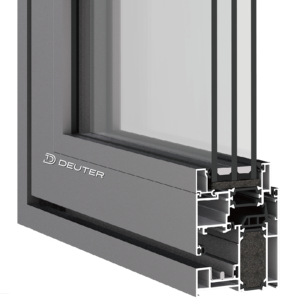 CE Certified
Apartment Project Custom Aluminum Sliding Tilt Window Thermal Break Low-E Glazed
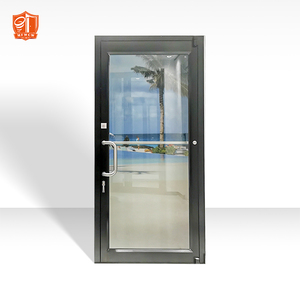 Heavy Commercial
Modern Commercial Storefront Door Glass Swing Entry Aluminium Door
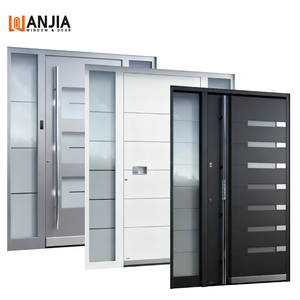 Multi-Point Lock
American House Villa Exterior Metal Main Entrance Door Security Black Front Entry
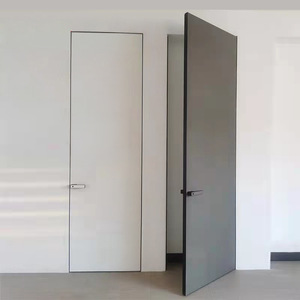 Concealed System
Modern Minimalist Invisible Aluminum Frame Interior Frameless Concealed Door
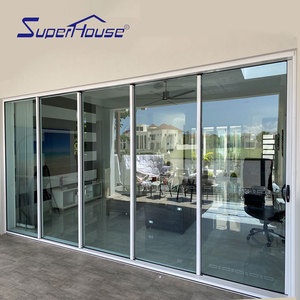 Heavy Lift-Slide
Superhouse Aluminium Door and Window Lift and Sliding System for Villa
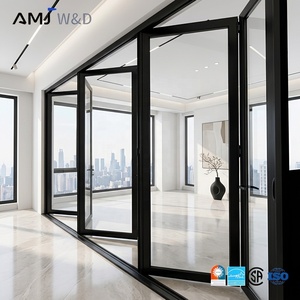 Panorama View
Factory Exterior Thermal Break Bi-Fold Accordion Glass Patio Folding Doors
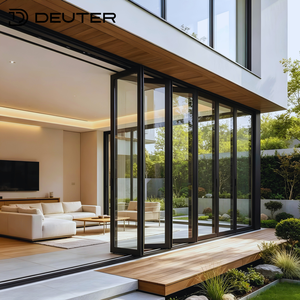 Minimal Sightline
Hidden Hinge Design Thermal Break Aluminum Exterior Bifold Glass Modern Door
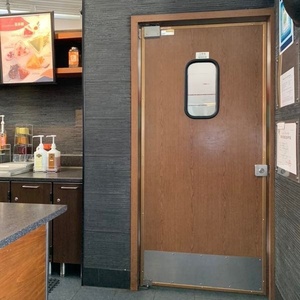 High Durability
Lightweight Operation Restaurant Commercial Kitchen Swing Door
The Technical Framework of CE Certified Aluminum Glass Windows (EN 14351-1)
In modern architectural procurement, the designation of CE Marking is not merely a bureaucratic export formality; it represents an exhaustive regulatory conformity standard governed by EN 14351-1:2006+A2:2016 (Windows and external pedestrian doorsets). For structural engineers, facade consultants, and commercial real estate developers, sourcing from an accredited Chinese OEM factory requires deep technical scrutiny into how fenestration systems perform across severe environmental, acoustic, and mechanical stress matrices.
At our 180,000 m² advanced manufacturing facility in Foshan, Guangdong—the core cluster of global precision aluminum extrusion—every window profile and curtain wall interface is subjected to Initial Type Testing (ITT) and Factory Production Control (FPC). Sourcing CE certified windows requires verified performance curves across five critical building envelope metrics:
Air Permeability (EN 1026 / EN 12207)
Class 4 certification verified up to 600 Pa test pressures. Eliminates unintended envelope infiltration, minimizing sensible HVAC load losses and preventing drafts in extreme high-rise wind conditions.
Watertightness (EN 1027 / EN 12208)
Rated up to Class 9A and exceptional custom Class E1050 (1050 Pa static water head). Utilizes isobaric equalization chambers, concealed drainage sills, and continuous vulcanized EPDM gaskets.
Wind Load Resistance (EN 12211 / EN 12210)
Class C5 structural verification with frontal deflection restricted below L/300 under dynamic pressures up to 3000 Pa, withstanding typhoon-grade wind shears and coastal velocity regimes.
Thermal Transmittance (U-Value) Optimization Engineering
Meeting rigorous European energy conservation standards and modern ESG building guidelines necessitates a balanced thermal transmittance rate (Uw). Standard aluminum is naturally conductive (~160 W/mK); hence, our CE compliant systems integrate high-precision, glass-fiber reinforced Polyamide PA66 GF25 thermal break strips that physically decouple interior and exterior aluminum chambers. Combined with warm-edge structural spacer bars, 90% argon gas cavity retention, and double or triple Low-E coated glass assemblies (Guardian or AGC substrates), overall window U-values achieve down to 0.85 to 1.3 W/m²K.
| Performance Characteristic | Standard Commercial Grade | DERCHI CE Architectural Class | Passive House Certified Spec |
|---|---|---|---|
| Thermal Transmittance (Uw) | 2.8 – 3.5 W/m²K | 1.1 – 1.4 W/m²K | ≤ 0.80 W/m²K |
| Air Permeability Class | Class 2 (300 Pa) | Class 4 (600 Pa) PASSED | Class 4 (±600 Pa tight) |
| Watertightness Rating | Class 4A (150 Pa) | Class 9A to E1050 (1050 Pa) | Class E1200+ |
| Sound Reduction Index (Rw) | 28 – 32 dB | 38 – 45 dB (Acoustic PVB) | 44 – 48 dB (Triple Laminated) |
| Security & Intrusion (EN 1627) | Basic Latch Point | RC2 / RC3 (Patented 4-Side 6-Point) | RC3 / RC4 Multi-Lock |
| Surface Anodizing / Coating | Standard Mill / 15μm | Qualicoat Class 2 / 25μm Fluorocarbon | Marine Grade C5-M Extreme |
Acoustic Attenuation (EN ISO 717-1) for Urban Developments
Urban density demands strict sound attenuation. Standard IGUs often experience resonant dips between 100 Hz and 3150 Hz. To solve this, DERCHI utilizes asymmetric laminated glazing (e.g., 6mm Low-E + 12Ar + 4mm Clear + 0.76mm Acoustic PVB + 4mm Clear). This breaks sympathetic acoustic frequencies, achieving verified sound dampening of up to Rw 42 to 46 dB, making these units ideal for mixed-use hotel high-rises and transit-adjacent luxury apartments.
Intelligent Manufacturing Base in Foshan, China
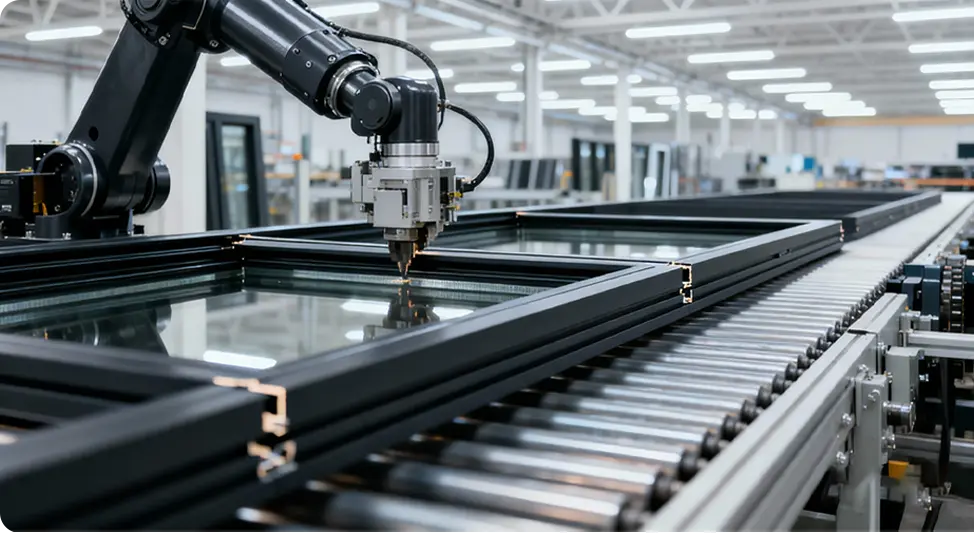
Operated by Guangdong Dejiyoupin Doors and Windows Co., Ltd. (DERCHI), our automated manufacturing complex spans over 180,000 square meters. Formally recognized as a "China Famous Brand" by Xinhua News Agency, DERCHI brings 25+ years of dedicated R&D and fenestration engineering to global developers.
-
Over 100 Independently Developed Patents: Includes our proprietary Four-Side Six-Point perimeter lock system, providing unmatched structural pull-in against negative wind loads and superior anti-theft protection.
-
Rigorous 360° Quality Control Protocol: Multi-point tolerance monitoring across profile extrusion wall thicknesses, polyamide crimping pull-off tests, corner crimp tensile shear, and automated helium leak detection in double/triple glazing units.
-
Global Landmark Proven: Over 18,000 completed architectural installations across North America, Europe, Australia, and South America, serving elite hospitality chains including Hilton Hotels and Atour Hotels.
Comprehensive Global Certifications
Full conformance with CE (EU EN 14351-1), NFRC (USA energy ratings), AS2047 (Australian Standards), CSA (Canada), and Energy Star compliance alongside ISO 9001 certified manufacturing lines.
Whole-Envelope Engineering Integration
Unified supply chain synergy across thermal break casements, heavy lift-sliding glass doors, frameless concealed systems, hurricane impact storefronts, and glass sunroom enclosures.
Zero-Error Digital Takeoffs
CAD/BIM engineering teams review architectural elevation schedules, calculate structural deflection moment of inertia (Ix, Iy), and deliver shop drawings that eliminate on-site framing clashes.
Future B2B Procurement Trends in Commercial Aluminum Windows
As the construction landscape pivots toward carbon accountability, extreme weather resilience, and optimized building lifecycle management, fenestration procurement is shifting rapidly. General contractors and project specifiers can no longer rely on baseline specifications. Key developments shaping multinational fenestration tenders include:
1. Embodied Carbon & Low-Carbon Aluminum (CBAM)
The implementation of the EU's Carbon Border Adjustment Mechanism (CBAM) makes certified low-carbon recycled aluminum billets (using renewable hydro-powered smelting) mandatory for LEED, BREEAM, and DGNB project ratings.
2. Extreme Climate & Hurricane Resiliency
Global coastal markets increasingly require impact-rated laminated fenestration. Laminated glass utilizing high-shear SentryGlas (SGP) ionoplast interlayers resists wind-borne debris impact up to TAS 201/202/203 testing regimes.
3. Smart Building Automation (BMS Sync)
Concealed motorized actuators and IoT-enabled sensors integrated directly into the window frame tie into central Building Management Systems (BMS) for automated natural ventilation, smoke evacuation, and solar tracking.
Furthermore, procurement teams are demanding comprehensive Environmental Product Declarations (EPDs) and cradle-to-gate Life Cycle Assessments (LCAs). DERCHI actively supports zero-carbon building initiatives by standardizing alloy compositions with traceable secondary aluminum contents, high-efficiency powder coatings free of VOCs, and fully recyclable thermal polyamide extrusions.
Architectural Fenestration & Hardware Development Trends
Architects worldwide are pushing the boundaries of light, transparency, and minimalist sightlines while building envelopes demand superior insulation. Balancing structural stability with aesthetic minimalism is driving continuous innovation across profile design:
Ultra-Slim Visible Profiles
Interlocking vertical mullions narrowing down to 20mm–26mm without sacrificing wind deflection ratings. This allows floor-to-ceiling glass expanses that flood modern luxury interiors with natural light.
Concealed Hardware Integration
Hidden multi-point gear hinges, flush perimeter drop-seals, and integrated insect screen channels that maintain pristine clean architectural aesthetics inside and out.
Vacuum Insulated Glass (VIG) Systems
Next-generation ultra-thin insulated glass featuring vacuum thermal cavities that match the insulation performance of thick triple glazing within slim framing depths, reducing total building dead-weight.
Our 8-Step Engineering & Export Verification Workflow
Cross-border fenestration procurement requires complete structural transparency. DERCHI utilizes an 8-stage project delivery lifecycle to eliminate site delays, installation discrepancies, and shipping transit damage:
01. Architectural Takeoff & Review
Detailed analysis of window opening schedules, structural loads, egress codes, and CAD plan reviews to flag potential site conflicts.
02. Engineering & FEA Calculations
Finite Element Analysis of mullion moments of inertia (Ix, Iy), glass stress tolerances, and thermal simulation under EN ISO 10077-2.
03. Comprehensive Technical Proposal
Detailed system profiles, thermal break specifications, glass build-ups, and hardware schedules with fixed pricing.
04. Detailed Shop Drawings Sign-off
Submittal of 1:1 scale shop drawings detailing sill flashings, receptor systems, anchoring lugs, and sealant perimeter joints.
05. Precision CNC Production
Double-mitre computerized sawing, automated hardware pocket milling, and hydraulic corner crimping with two-part epoxy injection.
06. 360° Quality Control Inspection
Verification of dimensional diagonals (±1.0mm tolerance), coating thickness gauges (Qualicoat standard), and air-water testing.
07. Export Crating & Container Staging
Protective peelable film, reinforced foam corner caps, and fumigated steel-strapped A-frame wooden crates engineered for ocean transit.
08. On-Site Technical Installation Guidance
Complete installation manuals, video submittals, and optional on-site field engineering supervision for high-rise commercial jobs.
Dedicated Engineering Desk
Collaborate directly with our facade design team for custom extrusion dies, customized anodized finishes, or blast-resistant framing assemblies.
Frequently Asked Questions by Commercial Buyers
Clear, direct answers regarding testing standards, ocean logistics, technical customization, and contract terms for developers and contractors.