Choosing an Aluminum Door starts with how a space is used. A patio opening may need a broad, clear view; a narrow utility entrance may need a simple, durable hinged design. The frame’s slim profile can bring daylight into a room, but the right choice depends on more than appearance. Opening style, thermal performance, hardware, and exposure to wind and rain all matter.
As fenestration consultant Alex Morgan puts it, “A good Aluminum Door should suit the opening, the climate, and the way people move through it.” That is a practical test, not a promise that one design fits every home. Sliding doors save floor space and create wide glass openings. Hinged and French doors offer familiar access, while bi-fold systems can fold back to connect indoor and outdoor areas. Pivot doors make a bold entrance, though their size and hardware need careful planning.
Details count. Check the sill height, seals, locking points, and frame finish. In colder or hotter regions, a thermal-break frame may help limit heat transfer. Ask for product specifications, not just attractive showroom samples. A glossy finish can look convincing under bright lights. Real weather is less forgiving.
The guide ahead compares the main Aluminum Door types by operation, appearance, and typical use. Some trade-offs are easy to miss. Large glazed panels can brighten a room, yet they may need more cleaning and careful glass selection. The best choice is the one that works in daily life—not only in a product photo.
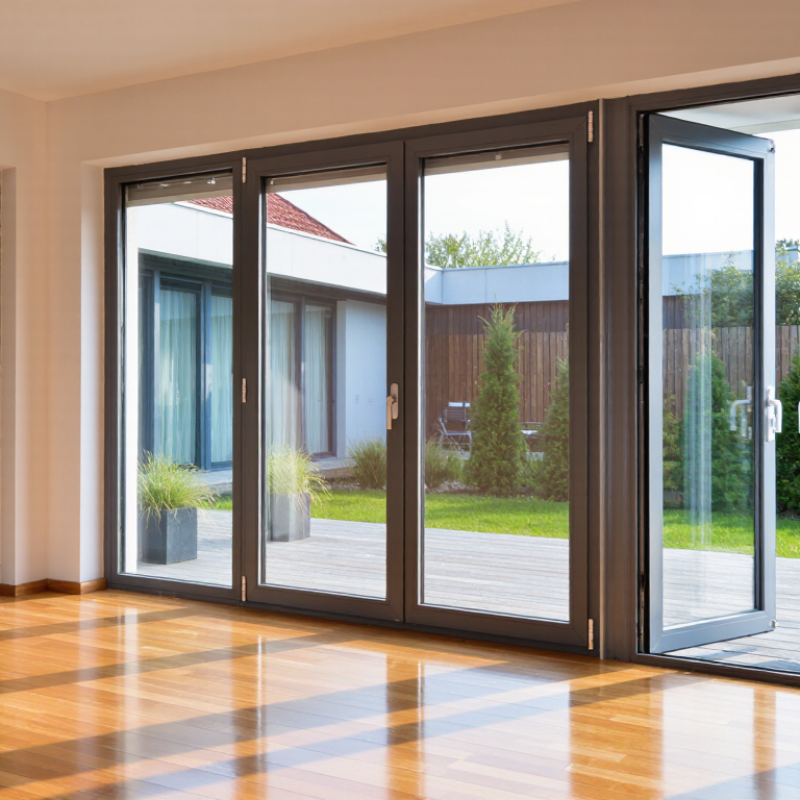
The opening mechanism shapes how an aluminum door feels in everyday use. Hinged doors swing inward or outward and suit entryways where there is room for the door leaf. Check the swing path against nearby furniture, steps, or a narrow hallway. Small detail.
Sliding doors move along a track, making them useful beside patios or in rooms with limited floor space. Their tracks need regular cleaning, since grit can affect movement. Bi-fold doors fold into sections and can create a broad opening, but their panels and hardware need enough clearance when stacked.
Layout matters just as much. A single door keeps an entrance simple, while paired doors can make a wider opening feel balanced. Some designs add fixed glass panels beside the moving door to bring in more daylight without widening the passage itself.
Pivot doors turn on hardware set away from the frame edge; they can suit large panels, though panel weight and floor clearance need careful assessment.
Wider is not always better.
Before choosing, measure the clear opening, not only the frame, and consider who will use the door daily. The best arrangement depends on the building, exposure, and installation details.
Sliding aluminum doors suit wide openings because their panels move sideways rather than swinging into a room or patio. That keeps the floor area clear and creates a broad passage for people, furniture, and daylight. A two-panel layout may work for a modest opening; wider spans often need additional panels and carefully sized tracks. Ask how much clear opening remains when the doors are fully open. The total frame width can be misleading.
Large glass areas also deserve careful energy planning. The U.S. Department of Energy’s Energy Saver guidance reports that heat gain and heat loss through windows account for about 25–30% of residential heating and cooling energy use. This figure covers windows generally, not sliding doors alone, but it shows why glass specification matters. Compare whole-unit U-factor and solar heat gain coefficient, then consider local climate and exposure. Low-e glass can help, though the right choice depends on sunlight and orientation.
Look closely at the details. Smooth rollers, a stable sill, drainage paths, and secure multipoint locking all affect daily use. For a wide opening, the header and surrounding structure must support the load; a qualified professional should verify the design. Measure twice. And remember: a flush threshold looks clean, but water management can be less forgiving. I would not choose appearance before checking the track, weather seals, and maintenance access.
Hinged aluminum doors are a practical choice for everyday entrances, from a kitchen opening to a busy side door. Their frames are generally lightweight yet sturdy, so the door can feel manageable during frequent use. A smooth swing depends on more than the frame: well-aligned hinges, a suitable closer, and a stable threshold all matter. For colder or hotter climates, ask whether the frame includes a thermal break, which can reduce heat transfer. Small details count.
Tips: Measure the opening at several points, since walls and floors are not always perfectly square. Choose hardware that feels comfortable in your hand, and check that the door clears nearby furniture. Keep the hinge side accessible for routine adjustments.
Before choosing a design, consider how the doorway is used each day. A broad glass panel can bring daylight into a dim hallway, while privacy glazing may suit a bathroom entrance. Weather seals help limit drafts, but worn or poorly fitted seals can still let air through. Aluminum finishes also need occasional cleaning, especially near salty coastal air. Hinged doors are not ideal for every tight space; their swing needs room, and I would not overlook that when planning an otherwise attractive renovation.
Folding aluminum doors can turn a wide wall opening into a flexible connection between rooms or between a home and a patio. Their panels fold to one side or split across both sides, depending on the layout. Open, they create a broad passage. Closed, they provide a defined boundary without the visual weight of many solid doors.
Aluminum frames are valued for their strength relative to their slim profiles, which can leave more room for glass. This helps daylight reach deeper into a living area. Panel count, opening direction, and threshold height all affect daily use. A low threshold can make movement easier, but weather protection and drainage still need careful attention. Details matter.
Good planning starts with measuring the opening and considering how people will use it. A busy kitchen may need a layout that keeps folded panels clear of counters and walkways. In a cooler climate, suitable glazing, seals, and installation can help limit drafts; performance depends on the whole assembly, not the frame alone. Folding systems also need space to stack their panels. That part is easy to overlook. They are not always the best choice for a narrow room, and large glazed panels may need regular cleaning. A little caution here saves frustration later.
Pivot and multi-panel aluminum doors can turn an ordinary opening into a strong architectural feature. A pivot door rotates on hardware set above and below the panel, rather than on side hinges. This allows a broad, uncluttered door leaf and a distinctive swing. It can suit a spacious entry or a room divider. Check the swing path carefully. Furniture, narrow hallways, and floor level changes can limit how comfortably the door operates.
Multi-panel doors offer a different kind of flexibility. Sliding panels can gather at one side, while folding systems can open a wider section of the wall. Slim aluminum frames help preserve clear views of a garden or patio. The details matter: track depth, panel weight, drainage, and threshold height all affect daily use. For large glazed panels, ask a qualified installer to confirm the opening and hardware are suitable for the project. Measure twice.
Both styles need thoughtful planning. A pivot door may feel dramatic, but it can be awkward in a compact space. Multi-panel systems can create a generous opening, yet tracks need regular attention to stay clear of grit. Thermal breaks and suitable glazing may also improve comfort, depending on climate and installation. These choices are easy to overlook. The best design is not always the largest one; it is the door that works smoothly with the room, the view, and everyday routines.
Measure the clear opening, not just the frame. Check nearby furniture, steps, and hallway space.
It suits everyday entrances, such as kitchen or side doors. Make sure its swing has enough room.
Yes. They move along a track and do not need floor space for a swing. Clean the track regularly; grit can slow it down.
Their panels fold to create a broad opening. Allow clearance for the stacked panels and hardware.
A single door keeps an entrance simple. Paired doors create a wider, balanced opening, but may not suit every passage.
Yes. Panels beside a moving door can brighten a room without widening the passage. Privacy glazing may be better near bathrooms.
Hinge alignment, a suitable closer, and a stable threshold all matter. Small details count.
Salt in the air can make regular cleaning important. Weather seals also need checking, since worn ones may let drafts through. I might overlook them at first.
Aluminum doors come in several styles, each suited to different spaces and ways of moving through them. Sliding aluminum doors glide along a track, making them a practical choice for wide openings where a clear, open feel is desired. Hinged aluminum doors offer familiar, straightforward access and work well for everyday entrances. The best option depends on the available space, the size of the opening, and how the area is used.
For adaptable layouts, folding aluminum doors can open up a room by gathering multiple panels to one side. Pivot doors rotate around a central point, creating a distinctive entrance, while multi-panel designs can span broader openings and offer flexible ways to connect indoor and outdoor areas. An Aluminum Door can combine clean lines with dependable everyday function, so choosing the right opening mechanism helps balance appearance, convenience, and the needs of the space.