Choosing a washroom door involves more than matching a finish to the tiles. The door must handle frequent use, changing humidity, and the available opening space. An Aluminium Washroom Door can be a practical option because aluminium is lightweight and resists corrosion, but performance still depends on its construction, finish, and hardware. A good-looking product is not automatically a good fit.
Small details matter. A narrow cubicle may need a space-saving swing or sliding design, while a shared facility may benefit from durable hinges and easy-to-clean surfaces. Ventilation gaps, privacy, accessible clearance, and secure latching also deserve attention. Requirements can vary by building and project, so check product specifications and consult a qualified installer when needed. The catalog photo may not show how a handle feels after hundreds of uses. That is worth considering.
This guide introduces ten aluminium washroom door types buyers may encounter, from familiar hinged options to designs suited to tighter layouts. It explains the practical differences without assuming one style works everywhere. Compare dimensions, panel thickness, finish, hardware, and maintenance needs before choosing. Ask suppliers how the door performs in damp interiors and what care the finish requires. Some product descriptions sound precise but leave useful questions unanswered. A careful comparison helps reveal those gaps and supports a choice that suits the room, budget, and expected daily use.
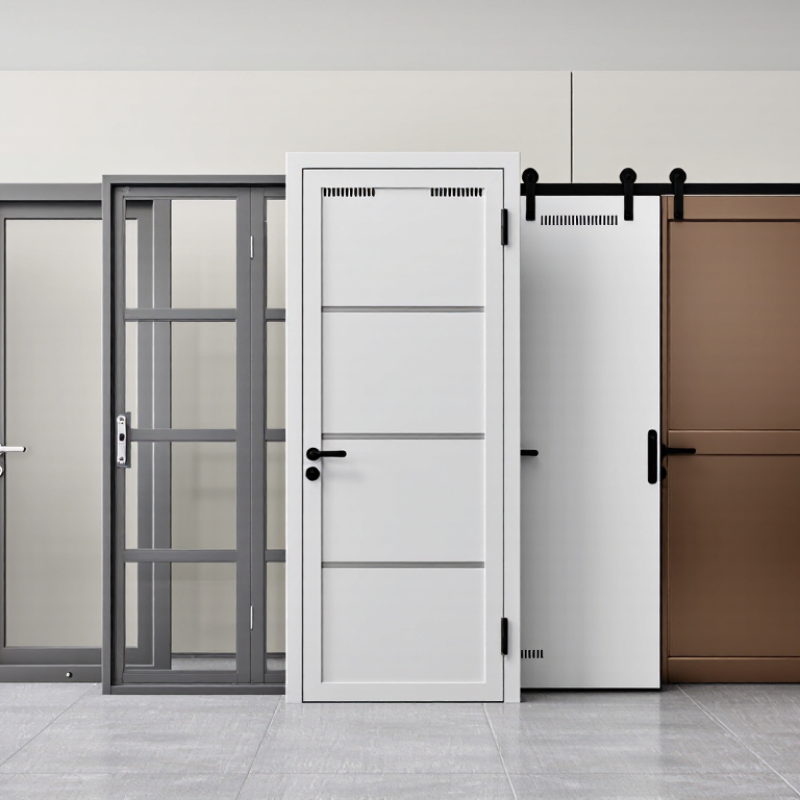
Aluminium washroom doors are designed as coordinated assemblies: frame, door leaf, infill, hardware, and finish. Buyers can classify them by opening action, such as hinged, sliding, or folding, and by panel construction, including solid, louvred, or glazed designs. Fit comes first. Measure the opening, wall thickness, floor clearance, and available swing space before selecting a configuration. A slim frame may look clean, but it cannot correct a poorly measured opening.
Classification also reflects privacy, ventilation, and cleaning needs. Solid infill offers greater visual privacy, while louvres can support airflow but may expose sightlines if placed carelessly. In the United States, the 2010 ADA Standards specify at least 32 inches of clear width for accessible door openings; local project requirements should be checked.
Hardware, edge protection, and corrosion-resistant finishes matter in damp rooms, though the right specification depends on cleaning routines and exposure. Material sourcing is another design consideration. The International Aluminium Institute reports that recycling aluminium uses about 95% less energy than producing primary aluminium. That figure concerns the material, not a complete door’s lifecycle impact. Ask suppliers for recycled-content documentation and confirm whether panels, frames, and hardware are included. Small details matter. A finish that looks durable in a sample may still need testing against the site’s cleaners and moisture conditions.
Aluminium washroom doors come in several useful forms. Hinged doors are familiar and simple to maintain, but they need clear swing space. Sliding doors save room in narrow corridors. Bi-fold doors fold back neatly, though their tracks need regular cleaning. Pivot doors rotate from floor or ceiling fittings and suit wider openings. Space matters.
Louvered doors allow steady airflow through angled slats, while perforated-panel doors use small openings for ventilation. Frosted-glass doors in aluminium frames bring in light while limiting direct visibility. Solid-infill doors offer a more private, substantial feel. Doors with ventilation grilles near the top or bottom can support air movement without exposing the whole interior. Compact washroom cubicle doors use lightweight aluminium frames and panels for individual stalls.
Each design has trade-offs. For example, a sliding door can be awkward if its track collects dust or soap residue. Not always ideal. Check the opening width, moisture exposure, cleaning routine, and privacy needs before choosing. On site, the door’s weight and frame alignment can affect how smoothly it closes; these details are easy to overlook in a catalogue. A sample installation can reveal problems that drawings miss.
Aluminium washroom doors vary less by appearance than by how they handle sightlines, airflow, and movement. Solid-panel doors offer stronger visual privacy, especially in busy facilities, but they can leave a small room feeling closed in. Add a high-level ventilation gap or discreet louver, and air can move without exposing the occupied space. The trade-off is sound: more airflow usually means less acoustic separation. There is no perfect balance.
Frosted inserts admit borrowed light while obscuring direct views, though the panel’s height and placement matter. Narrow louvered doors ventilate well, but users may notice more noise and a less private feel. For compact cubicles, sliding doors avoid the swing arc of a hinged door; check that the track stays clear of dust and moisture. Folding doors also save floor space, but their joints and hardware need regular inspection. Small details matter.
In a wider washroom, a standard hinged aluminium door is often simple to operate and maintain. Its swing can conflict with sinks, bins, or passing users, so measure the actual clearance rather than relying on a floor plan alone. Full-height panels can strengthen privacy, yet they may restrict airflow unless ventilation is planned separately. I have seen layouts look efficient on paper and feel awkward in use. A sample door mock-up can reveal that before installation.
Before choosing an aluminium washroom door, compare the frame, panel construction, finish, and hardware as one system. A slim profile may look clean, but a flexible panel can rattle when users close it. Check frame depth, panel thickness, hinge support, and the clearance beneath the door. Small details matter. In busy facilities, test whether the latch is easy to operate and whether replacement parts are standard sizes.
Moisture resistance depends on more than aluminium alone. Inspect coating coverage around cut edges, screw holes, and the bottom rail, where water and cleaning residue can collect. Ask suppliers how panels, hinges, and seals should be maintained. The U.S. Department of Energy reports that recycled aluminium production uses about 95% less energy than primary production. The International Aluminium Institute’s Global Aluminium Cycle 2021 report estimates that about 75% of all aluminium ever produced remains in use. These figures describe the wider material cycle, not the lifespan or recyclability of a specific door.
Compare warranties, tested performance, and installation requirements alongside the purchase price. A lower quote can be tempting, yet thinner hardware or unusual replacement parts may raise upkeep costs. Even a polished specification can miss real cleaning routines. Ask for a sample finish and inspect it under the lighting used in the washroom.
Installation quality often decides whether an aluminium washroom door stays quiet and square. Measure the finished opening after wall tiles are installed; even a small floor slope can cause scraping. Check the swing, latch reach, and privacy gap before fixing the frame. Measure twice.
In damp rooms, isolate aluminium from dissimilar metals with compatible washers or gaskets to reduce galvanic corrosion. Seal fixing points without blocking drainage paths, and keep hinge screws accessible for adjustment. A door that is perfectly aligned on handover may still shift after repeated use, so inspect it again after the first few weeks. This step is easy to skip.
Maintenance should be simple and regular. Wipe frames with a mild, compatible cleaner, then rinse and dry corners where water collects. Avoid abrasive pads and strongly alkaline products, which can damage finishes. Check hinges, latches, seals, and loose fasteners during routine cleaning. The International Aluminium Institute reports that recycled aluminium production uses about 5% of the energy required for primary production. Repairable hinges and replaceable panels can therefore help avoid discarding an entire door when one part fails. The right cleaning method still depends on the specified finish; confirm it with the supplier before using a new product.
Common options include hinged, sliding, bi-fold, pivot, louvered, perforated-panel, frosted-glass, solid-infill, grille-ventilated, and cubicle doors. Each suits different spaces.
A sliding door can save swing space. Keep its track clean, since dust and soap residue may affect movement.
Louvered slats, perforated panels, or small ventilation grilles allow airflow. Solid panels or frosted glass can limit direct visibility.
Compare the frame depth, panel thickness, hinges, latch, and clearance beneath the door. Small details matter.
Inspect coating around cut edges, screw holes, and the bottom rail. Water and cleaning residue often collect there.
Not always. A flexible panel may rattle when closed, so check hinge support and test the latch in person.
A sample can show how the finish looks under washroom lighting and whether the door closes smoothly. Drawings can miss alignment issues.
Recycled aluminium production uses about 95% less energy than primary production, according to the article. That figure does not establish one door’s lifespan or recyclability. Details get missed.
This guide introduces how an Aluminium Washroom Door is designed and classified, then outlines ten common door types and their typical features. It explains how different designs affect privacy, ventilation, accessibility, and the amount of space needed, helping buyers understand which options may suit different washroom layouts and levels of use.
Before choosing, buyers should compare materials and finishes, durability, hardware, ease of cleaning, and the balance between privacy and airflow. The guide also highlights practical installation and maintenance considerations, including accurate measurements, suitable fitting methods, and routine checks to keep the door operating smoothly. Together, these points provide a clear basis for comparing door types and selecting an option that fits the space, usage needs, and upkeep expectations.