Procurement Knowledge Hub
Frequently Asked Questions on Aluminum Patio Doors
Technical, logistics, and compliance answers addressed directly to procurement managers, facade engineers, and building contractors.
What structural alloy and wall thickness specifications are necessary for high-span aluminum patio doors?
For commercial and high-end residential applications with sash heights exceeding 2.7 meters, we mandate 6063-T6 or 6061-T6 architectural aluminum with profile wall thicknesses between 2.0 mm and 3.0 mm. Standard commercial doors with 1.4 mm profiles are prone to wind deflection and roller binding under high cyclonic gust forces. Furthermore, our interlock stiles are internally reinforced with galvanized steel or carbon composite inserts to maintain deflection ratios below L/175 or L/240 under full design wind loads.
How do lift-and-slide systems outperform conventional inline sliding patio doors in water tightness?
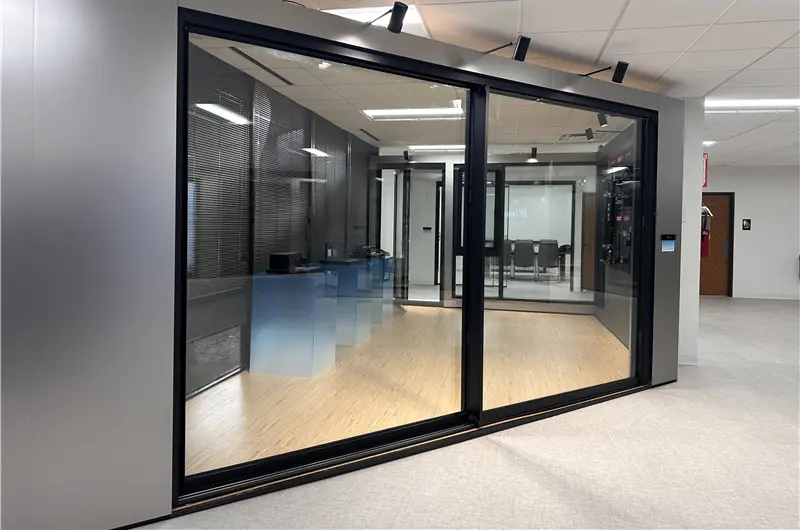
Conventional inline sliding doors rely on mohair brush seals that create frictional resistance and gradually degrade, often failing water penetration tests above 300 Pa. In contrast, lift-and-slide doors designed by Guangdong Dejiyoupin Doors and Windows Co., Ltd. utilize heavy-duty internal gear mechanisms. When locked, the entire door panel drops downward onto continuous, vulcanized EPDM rubber gaskets under severe mechanical compression. This forms an airtight, hermetically sealed perimeter that routinely passes dynamic water resistance tests up to 700 Pa and air infiltration benchmarks under 0.1 m³/(h·m²).
How does the thermal break design mitigate condensation in high-humidity or cold climates?
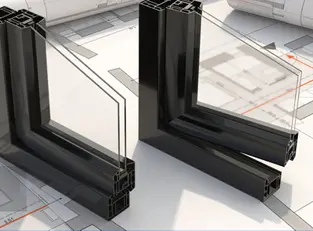
Aluminum is an exceptional conductor of thermal energy (approx. 160 W/m·K). Without thermal insulation, exterior temperature transfers instantaneously, triggering extensive interior condensation, mold growth, and HVAC energy loss. We insert reinforced polyamide strips (PA66 GF25) measuring 24 mm to 34 mm between the exterior and interior aluminum extrusions. Combined with argon-filled, warm-edge double or triple-glazed Low-E units, this multi-chamber thermal barrier isolates the internal frame, elevating the temperature factor (fRsi) above condensation thresholds.
What surface finishes are recommended to prevent corrosion in marine coastal environments?
For installations within 5 kilometers of ocean shorelines (such as Santos, Rio de Janeiro, Miami, or Valparaíso), standard decorative powder coatings are insufficient against salt-spray corrosion. We specify Qualicoat Seaside Class 2 fluorocarbon (PVDF 70% Kynar 500) coatings, capable of enduring 3,000+ hours of continuous neutral salt spray testing without blistering, chalking, or adhesion loss. Alternatively, 20–25 micron architectural anodized finishes provide superior surface hardness and resistance to coastal abrasion.
What security features does Guangdong Dejiyoupin incorporate to protect ground-floor patio openings?
Patio doors are statistically the primary target for residential forced entry. Guangdong Dejiyoupin Doors and Windows Co., Ltd. holds over 100 patents, highlighted by our proprietary Four-Side Six-Point Anti-Theft Lock system. Unlike single-point center latches, our heavy-duty bi-fold and sliding systems lock simultaneously into top, bottom, and lateral frame keeps using hardened steel mushroom cams, anti-lift interlock pins, and RC2 / PAS 24 burglar-resistance certified hardware configurations.
How does the factory prevent shipping damage and glass breakage during international ocean freight?
Shipping large-span architectural glass and precision aluminum frames demands heavy-duty export packaging. Every patio door sash is protected with 0.08 mm electrostatic PE film, reinforced with rigid closed-cell foam U-profiles on all corners, wrapped in moisture-resistant vapor barrier foil, and secured in fully enclosed, fumigated solid plywood crates. We include customized container packing diagrams and interior desiccant canisters to prevent transit condensation and salt-air oxidation during 45-day ocean journeys.